


EXCLUSIVE: R. Kelly Child Abuse Victim Reshona Landfair Brands Justice System Racist for Repeatedly Playing Abuse Footage in Court — 'If I Were a Caucasian Girl Who Got Peed On, It Would Have Been Different'

Reshona Landfair looked back at how she was treated during the height of the R.Kelly trials.
Feb. 3 2026, Published 7:00 p.m. ET


Reshona Landfair said the U.S. justice system treated her as a spectacle rather than a victim when prosecutors repeatedly played footage of her abuse at the hands of R. Kelly in open court.
RadarOnline.com can also reveal the child porn victim feels race shaped how she was seen and protected.
Reshona Landfair Breaks Her Anonymity

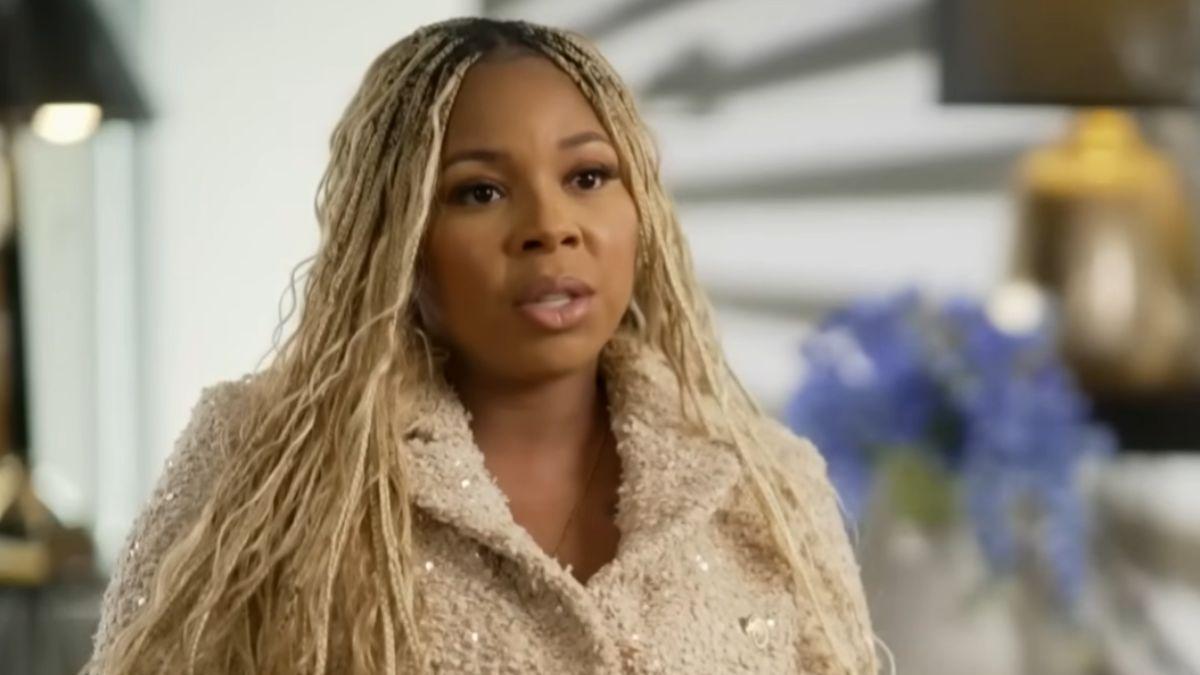
Landfair waived her anonymity to criticize the U.S. justice system.
Now 42, the former "Jane Doe" at the center of Kelly's infamous child abuse tape has waived her anonymity to criticize how courts, media, and the wider culture responded to the videotaped assaults she suffered as a Black girl.
In a new memoir, Who's Watching Shorty? Reclaiming Myself from the Shame of R. Kelly's Abuse, and in her first-ever in-depth interview, Landfair describes a decade-long abusive relationship with Kelly, now 59, who is serving long federal prison sentences for racketeering, s-- trafficking, and producing child sexual abuse imagery.
She was 14 when the singer, whom her family knew as her godfather, recorded the tape that later circulated on street corners and became central to cases brought in Chicago.
She said those cases, and the way they were run, exposed a system that continually failed to recognize her as a child victim.
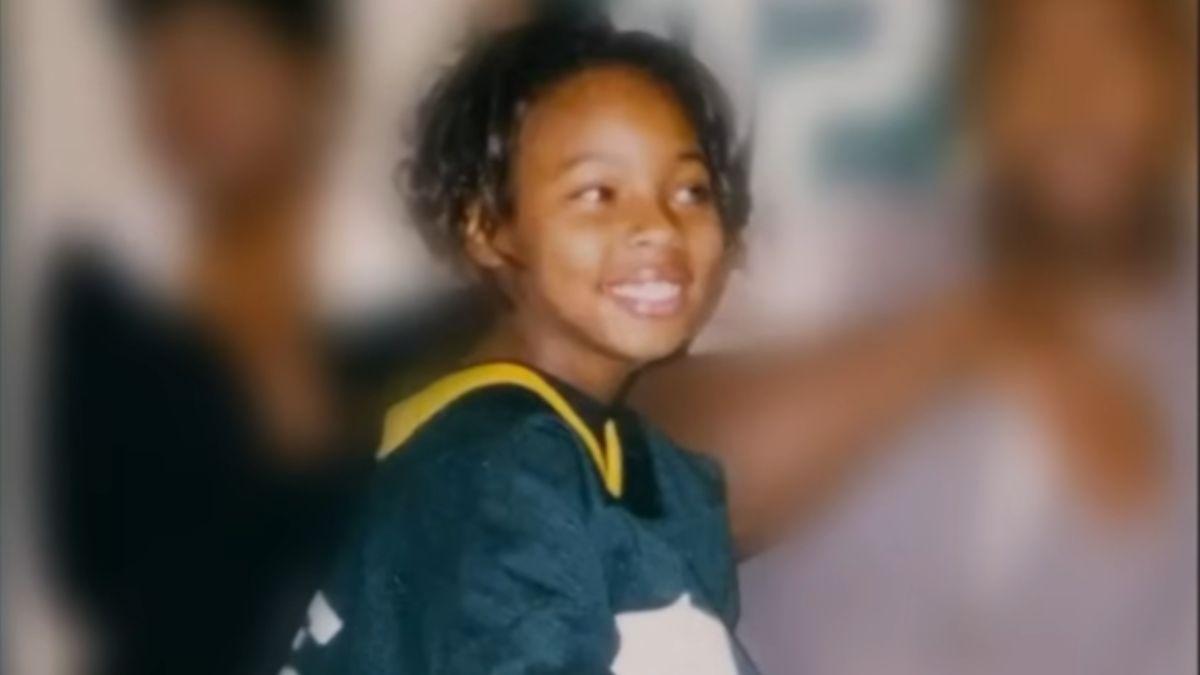
Landfair was at the center of Kelly's infamous child abuse tape.
Landfair recalls how, during the 2002-'08 state case against Kelly, prosecutors showed the horrifically explicit 26-minute tape multiple times in open court, even as they publicly identified her and allowed her face and body to be visible.
She said the decision, combined with years of sensational media coverage, left her exposed to public mockery while the man accused of abusing her walked free after an acquittal.
Bootleg copies of the tape were sold for a few dollars, and Landfair said she watched herself turned into a punchline in skits and comedy routines, even as basic safeguards routinely extended to other child victims were ignored.
Racial Bias in the Justice System?
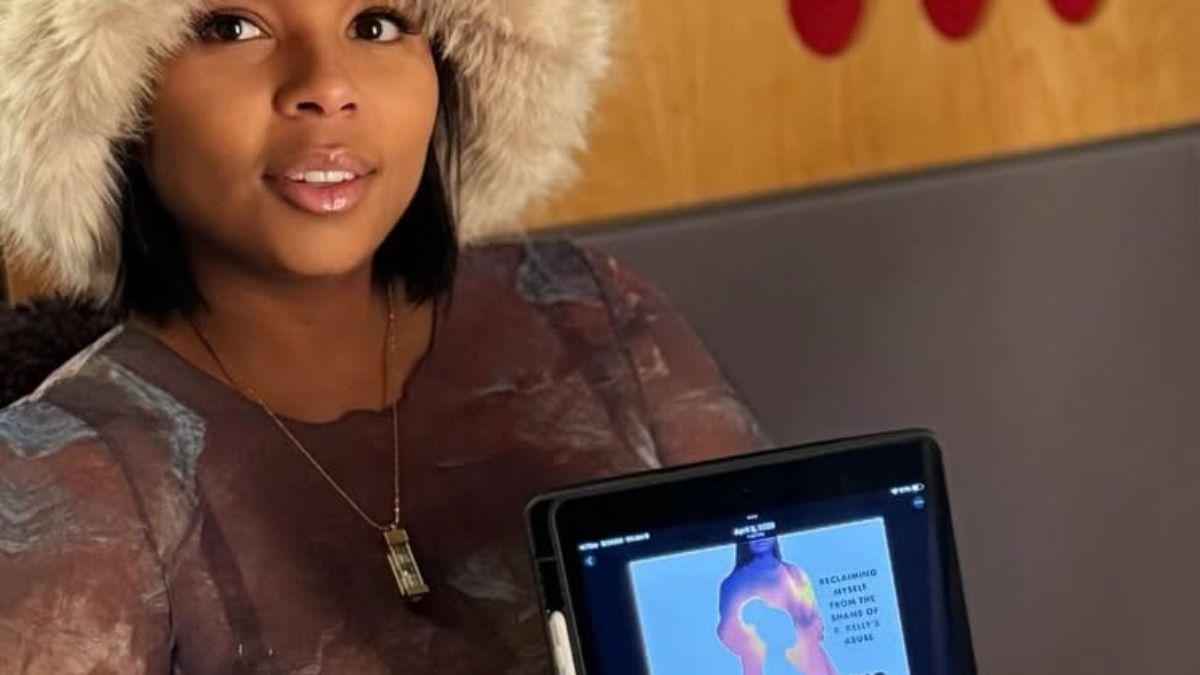
Landfair blamed herself for the abuse for a very long time.
Landfair now directly links that treatment to the way Black girls are perceived when they are sexually abused.
"If I were a Caucasian girl who got peed on, there would have been a different outcome. Everybody would have looked at things completely different," she said.
"It wouldn't have been no showing her body in a courtroom. It wouldn't have been the skits and being the mockery of the town... I'm not here to pull a race card or anything like that. I'm just speaking from my heart. And Black girls, we develop fast.
"We're a little bit curvier, we wear our hair differently, and that becomes our fault if something like this happens. For so long, ...I believed it was something I did. The entire time, nobody treated me the way I was supposed to be treated. To the public, I was a mockery. I was never a victim, so I never saw myself as a victim."
Landfair has also described the cumulative impact of seeing her abuse replayed and joked about, while institutions that should have shielded her instead amplified her exposure.
And she lives with the knowledge she did not take the stand in Kelly's 2008 trial, after years of grooming and pressure from the singer left her terrified of being blamed for sending him to prison.
From just outside the courthouse, she said, she was barred from watching news or even Kelly's televised interviews about the case, kept deliberately in the dark about proceedings that revolved around images of her.
Nearly two decades on, she said, the choices she and her parents made sit heavily alongside the choices made by prosecutors who, in her view, treated her body as legal evidence first and as a child's body second.

Never Miss an

Daily updates from the heart of Hollywood, right to your inbox
By entering your email and clicking Sign Up, you’re agreeing to let us send you customized marketing messages about us and our advertising partners. You are also agreeing to our Terms of Service and Privacy Policy.

Landfair reached a conclusion to take ownership of her own story.
Her decision to speak publicly now, under her own name, is part of what she calls a final attempt to reclaim power after years in which the tape defined her.
"There's no job that I can apply for where this isn't the forefront of my life. There's no relationship I could be in where this isn't the forefront of my life," Landfair said.
"(I felt) like I was losing power. I came to a conclusion one day, and I said, 'If I just lay all of this out, I no longer have to explain myself. I no longer have to fear the whispers about me at the table, 'Oh, you know who that is?' ... Once I realized that I didn't have peace or privacy (by hiding), I had to take ownership.'"
