


Jeffrey Epstein 'Was Strangled' — Doctor Present at Vile Pedo's Post-Mortem Claims He Did Not Kill Himself Behind Bars... And Insists His Death Be 'Reinvestigated’

Dr. Michael Baden is convinced Jeffrey Epstein did not commit suicide.

Feb. 13 2026, Published 1:29 p.m. ET


A prominent forensic pathologist who witnessed Jeffrey Epstein's autopsy is convinced there is no way the s-- fiend could have killed himself behind bars, RadarOnline.com can report.
Dr. Michael Baden was hired by Epstein's brother, Mark, to observe the body and give his opinion on what the pedophile's cause of death truly was.
Jeffrey Epstein and a Rush to Judgement

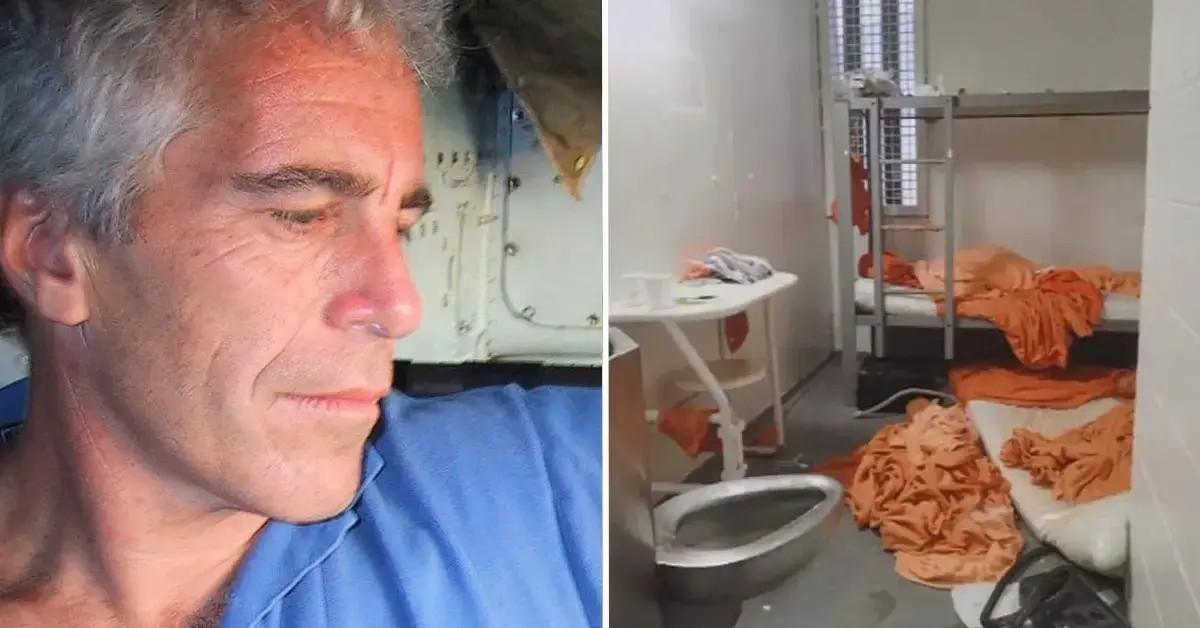
Epstein was found dead in his cell.
Baden, who has investigated hundreds of prison suicides over his 50-year career as the pathologist for the New York State Correction Medical Review Board, said there was no way the death was a "typical suicide."
"My opinion is that his death was most likely caused by strangulation pressure rather than hanging," he said in a new interview.
Baden did not carry out the post-mortem but was present during the examination, acting as an observer on behalf of Epstein's family, and was free to ask medical examiner Dr. Kristin Roman for any additional incisions or tests that he required.
"At the time that the autopsy was done by the medical examiner, we both agreed that, on the basis of the autopsy report and the information available, more information was needed to determine the cause and manner of death."
However, Roman's boss, Dr. Barbara Sampson, ruled Epstein's death a suicide just a week after the examination.
A New Death Investigation is 'Warranted'

Baden wants a new investigation into Epstein's death
Since then, the long-awaited release of thousands of Epstein documents and files has raised even more speculation and questions about the s-- offender's true cause of death.
"Given all the information now available, further investigation into the cause and manner of death is warranted," Baden concluded.
Epstein was found dead in his cell on Aug. 10, 2019, at the Metropolitan Correctional Center with a noose made from bedsheets tied to a bunk bed and wrapped around his neck.
But Baden, who retired from the Medical Review Board in 2023, told Radar that in the vast majority of the manual strangulation cases he’s investigated, there are rarely signs of injuries to the body except for the "ligature mark around the neck."
Signs of Strangulation

Baden said the signs point to a manual strangulation.
Baden said the report grossly ignored the fact that the 66-year-old Epstein had two fractures on the left and right sides of his larynx, as well as one fracture around his Adam’s apple – a tell-tale sign of manual strangulation.
"The most common way to commit suicide in jail or prison is by hanging, and in 99 percent of the cases I've investigated – and we’ve had hundreds of such deaths – I have never seen one with three fractures," Baden said.
What’s more, the ligature marks stretched across the middle of his neck near the Adam’s apple – instead of pressing underneath the jawbone like most hanging victims. Baden also doesn’t think Epstein was strangled by the bedsheet, as detailed by the IG report.
"The ligature mark doesn’t match the noose," he said. "If you look closely at the ligature, there is a pattern to indicate it was some kind of object squeezing on the neck. It was also narrower than the noose, so it didn't match."


A Case Baden Has 'Never Seen Before'

Never Miss an

Daily updates from the heart of Hollywood, right to your inbox
By entering your email and clicking Sign Up, you’re agreeing to let us send you customized marketing messages about us and our advertising partners. You are also agreeing to our Terms of Service and Privacy Policy.

A noose was discovered fashioned out of some of Epstein's prison clothes.
He added: "The pattern of injury and the other findings, particularly hemorrhages in the eyes, for example, are all common in severe neck compression and not common in hanging."
While Roman's office concluded the damage was due to a suicidal hanging, Baden believes the injuries were inflicted by someone else.
"I sat for 50 years on the commission that reviews every single death that occurred in jails, lockups, and prisons in the state of New York and the city of New York, during which time, for the 50 years, there were about 500-600 suicidal hanging deaths. Those types of three fractures had never been seen in any of those 500 cases."
