


Trump's Cankles Steal the Spotlight: Prez's Huge Ankles Put on Full Display During Meeting With World Leaders — as Health Fears Continue to Ramp Up

Donald Trump's visibly swollen ankles at the World Economic Forum fueled concerns for his health.

Jan. 22 2026, Published 1:10 p.m. ET


Donald Trump's cankles were front and center at the World Economic Forum in Davos, Switzerland, RadarOnline.com can reveal.
During a meeting with NATO Secretary General Mark Rutte on Wednesday, January 21, Trump took a seat, and his pants hiked up, revealing his swollen ankles.
Trump's Cankles Return on World Stage


Trump's swollen ankles were visible during meetings at the World Economic Forum.
Trump's swollen ankles were noticeable compared to the dainty ankles of Secretary of State Marco Rubio, who was seated next to the president.
As RadarOnline.com reported, in "an effort of transparency," Press Secretary Karoline Leavitt announced in July 2025 that Trump suffers from chronic venous insufficiency after the president's cankles and strange bruises on his hands sparked health fears.
"In recent weeks, President Trump noted mild swelling in his lower legs. In keeping with routine medical care, and out of an abundance of caution, this concern was thoroughly evaluated by the White House medical unit," Leavitt read off the statement before noting it was a "common condition" in elderly adults.
Trump's Diagnosis

The White House previously revealed Trump suffers from 'chronic venous insufficiency.'
"Importantly, there was no evidence of deep vein thrombosis or arterial disease," she continued.
"An echocardiogram was also performed and confirmed normal cardiac structure and function, no signs of heart failure, renal impairment or systemic illness were identified additionally."
Despite Leavitt insisting the diagnosis was no cause for concern, alarm bells have continued to ring out about the 79-year-old's health and mental acuity.
In September, a White House source reportedly admitted Trump preferred to hold events in the Oval Office or large meeting spaces so he "doesn't actually have to stand up for prolonged periods of time."

Health concerns have been surrounding Trump.
During a recent sit-down interview centered on his health, Trump admitted he's ignored doctor's advice for years regarding the high dosage of aspirin he takes daily.
"They say aspirin is good for thinning out the blood, and I don't want thick blood pouring through my heart," he explained. "I want nice, thin blood pouring through my heart. Does that make sense?”
"They'd rather have me take the smaller one," the president continued. "I take the larger one, but I've done it for years, and what it does do is it causes bruising."
Trump further confessed he has thin skin that's prone to bleeding. So much so, that Attorney General Pam Bondi caused him to bleed with a simple high-five at the 2024 Republican National Convention because her ring nicked his hand.

A medical expert recently presented a theory claiming Trump suffered a stroke sometime last year.
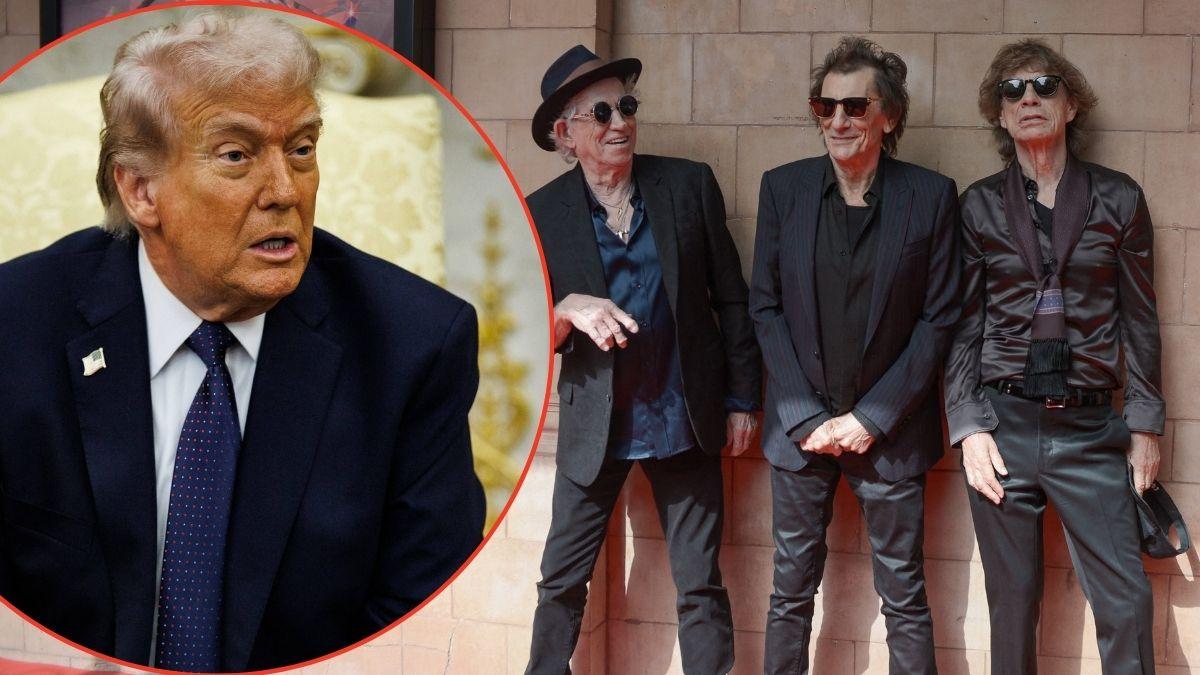

The president's cankles, along with his unhinged speech, fueled concerns for his health and mental acuity. Trump looked exhausted when he arrived in Switzerland and raised eyebrows as he very slowly and carefully descended Air Force One's stairs.
Trump's trip to Davos comes after a medical expert said he believed the president suffered a "stroke on the left side of his brain" sometime last year.
Bruce Davidson, MD, MPH, a professor at Washington State University’s Elson S. Floyd College of Medicine, pointed to noticeable decline in Trump's movement, speech and ability to stay awake through daytime meetings.

Never Miss an

Daily updates from the heart of Hollywood, right to your inbox
By entering your email and clicking Sign Up, you’re agreeing to let us send you customized marketing messages about us and our advertising partners. You are also agreeing to our Terms of Service and Privacy Policy.
"There are videos of him shuffling his feet, which is not what we'd seen previously when he was striding on the golf course," Davidson explained. "We've seen him holding his right hand cradled in his left."
"Earlier in 2025, he was garbling words, which he hadn't done before and which he's improved upon more recently," he noted before moving on to Trump's "marked episodes of excessive daytime sleepiness."
Davidson said Trump's "marked episodes of excessive daytime sleepiness," which is medically known as hypersomnolence, are common among stroke patients.
