


EXCLUSIVE: Josh Duggar's Lawyers Were Kept in Dark in Prison Transfer Mystery as Judge Denies Disgraced Reality TV Star's Appeal

Josh Duggar was sentenced to 12 years in prison.

June 3 2026, Published 6:22 p.m. ET


Josh Duggar was transferred to a medical facility by the Bureau of Prisons, but his team knows nothing about it, RadarOnline.com can exclusively reveal.
The disgraced 19 Kids and Counting star was held at FCI Seagoville, which is a low-security prison outside Dallas, Texas, before he was moved to the Federal Medical Center in Fort Worth, Texas.
His attorney, Beau Brindley, told us: "The Bureau of Prisons does not provide us with advance notice of prisoner transfers for security reasons. My office is investigating to verify Josh's well-being."
Josh Duggar Was Transferred to a Medical Facility


Josh was not known to have any severe medical condition prior to his transfer.
The facility treats inmates of various security levels and charges, and the BOP website describes it as "an administrative security federal medical center with a detention center."
They advertise a "unique" approach to prison wellness.
They are equipped to handle both mental and physical health needs. Inmates are transferred when medically necessary care exceeds the capabilities of their assigned corrections facility, which includes long-term treatments.
Radar contacted the facility for comment.
Duggar Was Convicted of Possession of CSAM

He pleaded not guilty to the allegations against him.
Duggar, 38, was accused multiple times of sexual misconduct, which led to federal charges of receiving and possessing CSAM (child sexual abuse material).
Special agent Gerald Faulkner described Duggar's computer drives as "in the top five of the worst of the worst that I've ever had to examine."
He was arrested in April 2021, and he pleaded not guilty.
When given bail, Duggar faced strict conditions as the judge ordered he was only allowed to have contact with his children in the presence of his wife. Further, he was required to wear an ankle monitor and was not allowed access to the internet.
He was convicted and sentenced to 12 years in prison with 20 years of supervised release.
However, Duggar continues to push for his freedom, asking to vacate his sentence. He claimed his conviction should be overturned due to constitutional issues.
In a June 1 order filed in the U.S. District Court for the Western District of Arkansas, Judge Timothy Brooks denied Duggar’s appeal.
He noted Duggar filed the motion too late, as it was filed a month after the deadline.
Duggar's New Facility Boasts Mental Health Programs

Duggar previously received counseling, according to his parents.
While it's unclear what brought Duggar to the medical facility, they are notably well-equipped to handle mental health problems – and the reality star previously received counseling treatment.
Duggar was accused, but not charged, with sexual misconduct incidents at home, which he confessed.
In 2015, an uncovered police report claimed Duggar admitted he "acted inexcusably" in incidents from 2002–2003.
Duggar touched the b----s and g------s of his sisters. His parents learned of his behavior before disciplining him at home.
However, when allegations from family members and family friends persisted, his parents claimed they sent him away from home for alleged counseling treatment.

Never Miss an

Daily updates from the heart of Hollywood, right to your inbox
By entering your email and clicking Sign Up, you’re agreeing to let us send you customized marketing messages about us and our advertising partners. You are also agreeing to our Terms of Service and Privacy Policy.


His Facility Does Not Offer a S-- Offender Treatment Program
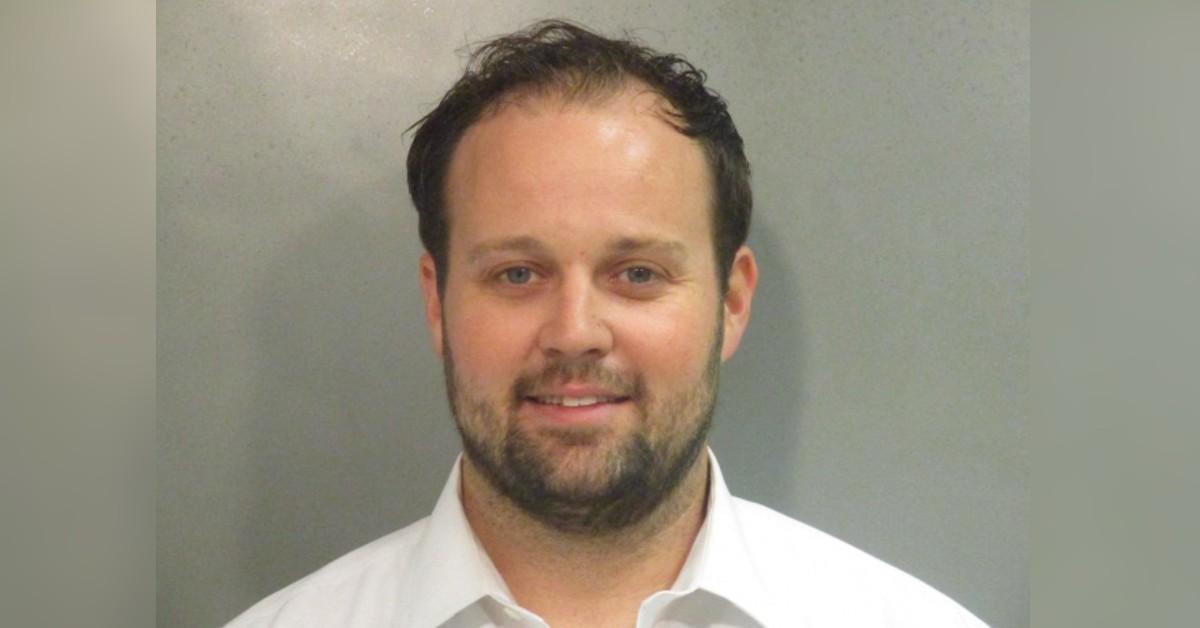
Duggar can request a transfer to a new facility.
The new facility, which has a strict photo policy, does not offer a s-- offender treatment program, though. According to the orientation and admissions handbook, obtained by Radar, the facility offers a "'Step-Down' program to assist with mental health treatment needs in the future."
Individuals who are interested in participating in a s-- offender treatment program "may be eligible to transfer to another facility," and they are encouraged to make a request to staff members.
No word yet on why Duggar was taken to the medical facility or if he is receiving counseling related to his mental health.
The prison puts a heavy emphasis on mental health treatment, encouraging inmates to participate in programs to prop each other up.
The book detailed, "The Psychology Department has an opportunity for a small number of qualified inmates to act as mental health companions. These inmates are trained by psychology staff members in identifying mental health concerns, suicide prevention, communication skills, and mental health issues and responses."
