


EXCLUSIVE: Trump Accused of Racing Supreme Court to Finish White House Ballroom — As 250-Person Crew Works 20 Hours a Day on Prez's Project

Donald Trump's massive White House ballroom is racing toward completion as its fate hangs in the balance at the Supreme Court.
Aug. 20 2026, Published 6:00 p.m. ET


Donald Trump has been accused of attempting to "outrun" judicial review by racing ahead with construction of his controversial $400million White House ballroom while its fate hangs in the balance at the Supreme Court, RadarOnline.com can reveal.
The accusation was leveled by the National Trust for Historic Preservation, as the organization urged the nation's highest court to reject the Trump administration's attempt to keep construction moving amid its ongoing legal battle.
White House Ballroom Battle Heats Up

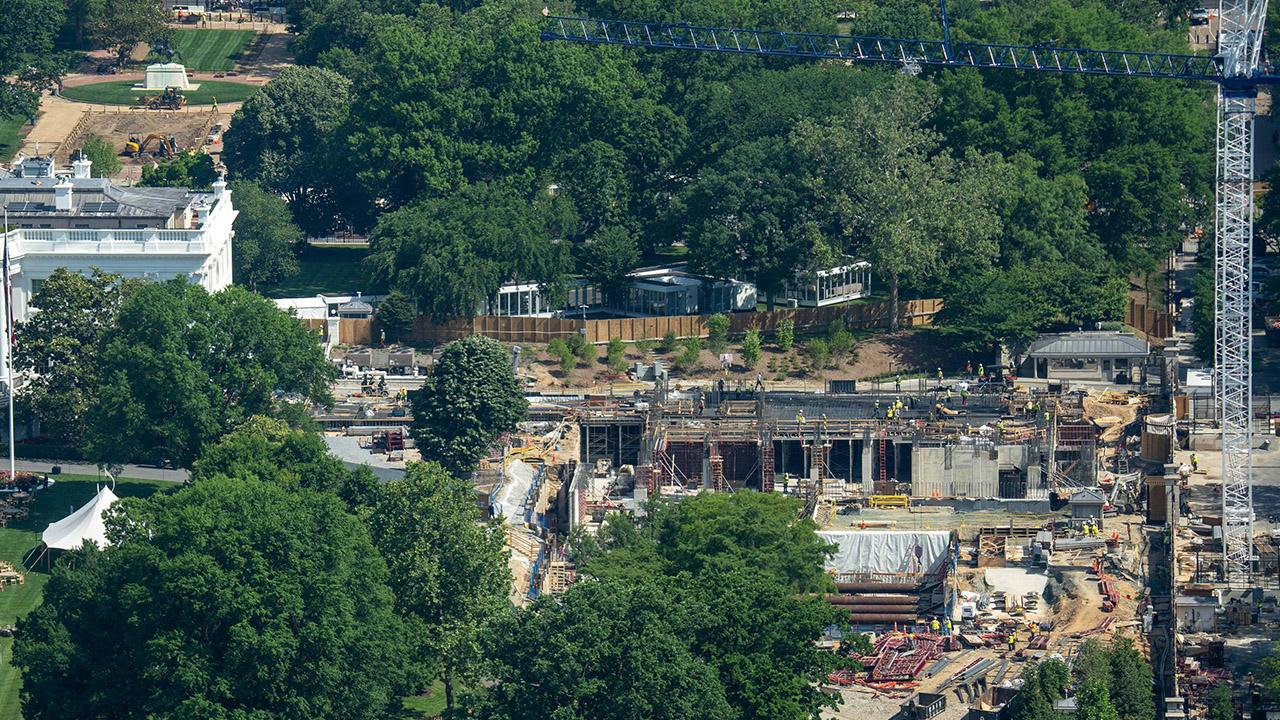
Construction on Trump’s White House ballroom has continued as the project faces a Supreme Court showdown.
According to court documents obtained by Radar, the preservation group claims Trump's administration has pushed the project forward at breakneck speed despite knowing its authority to build the structure was being challenged in court.
The Trust pointed to the government's own account of the extraordinary construction operation, which includes approximately 250 workers laboring in two 10-hour shifts every day. Crews have been working seven days a week, according to the filings, as the administration races to complete the massive White House development.
The Trust accused the government of using that rapid construction schedule to create urgency around the Supreme Court fight. Its attorneys claimed the administration had continued construction "to try to outrun judicial review" and argued the government should not now benefit from how far the project has progressed while litigation remains ongoing.
Trump Team Fires Back

Trump’s administration denied it was trying to 'outrun' judicial review and said the accelerated work is tied to security concerns.
Trump's administration fired back Wednesday, August 19, flatly rejecting the accusation. In its latest Supreme Court filing, the government called the allegation "false" and insisted officials have instead raced to "outrun" what it described as extraordinary security threats facing the president.
The administration maintains that every day Trump lacks access to the security features contained within the complex creates an unacceptable risk.
As Radar previously reported, the proposed ballroom is far more than an elaborate venue for White House events.
More Than a Ballroom

Trump's team has argued the project is tied to a much larger security and military complex beneath the White House.
Court filings have described the development as a highly integrated military complex stretching five stories underground and containing hardened concrete, steel, and rebar.
The sprawling security infrastructure is expected to include bomb shelters, medical facilities, top-secret military structures and specialized protective systems. Plans also call for sniper positions and a rooftop drone port, while officials have said specialized building materials are designed to withstand threats ranging from ballistic attacks to the effects of a nuclear blast.
The administration has argued the ballroom and security infrastructure cannot simply be separated because the entire project was designed as one integrated structure.


Security at the Center

Never Miss an

Daily updates from the heart of Hollywood, right to your inbox
By entering your email and clicking Sign Up, you’re agreeing to let us send you customized marketing messages about us and our advertising partners. You are also agreeing to our Terms of Service and Privacy Policy.

Trump’s lawyers say halting construction could interfere with security protections built into the project.
But the National Trust has challenged Trump's authority to proceed with the above-ground portion of the project without congressional approval.
The group told the Supreme Court that allowing the administration to continue construction while the legal fight unfolds risks making judicial review effectively meaningless.
Trump's lawyers have taken the opposite position, warning that stopping the project would interfere with urgently needed security protections.
The dispute has now turned the speed of construction itself into another battleground.
