


Trump Issues Ominous $6Trillion Stock Market Warning After Democrats' 'Strange' Election Victory as Financial Fears Mount

He claimed the Nasdaq had fallen 20% and blamed Democrats’ policies for the market decline.
Nov. 22 2026, Published 3:06 p.m. ET


President Donald Trump has blamed Democrats' victories in the November 3 midterm elections for a steep decline in U.S. stock market value, warning that the losses could worsen unless the party changes its policies.
In a Truth Social post on Sunday, November 22, Trump claimed the market had lost more than $6 trillion since Democrats secured control of the House and Senate.
He also said the Nasdaq was down 20%, blaming the losses entirely on what he described as Democrats' anti-growth agenda.
However, the market decline has been driven by several factors, including growing concerns about artificial intelligence investments, technology valuations, and the economic outlook.
Democrats have also yet to assume control of Congress, making Trump's criticism of their policies particularly contentious.
Trump Blames Democrats for Stock Market Decline


Democrats are not expected to take control of the House and Senate until January 2027.
"The Market is down more than 6 Trillion Dollars since the Democrats' rather strange 'win' on November 3rd," Trump wrote.
He accused Democrats of pursuing "Anti-Growth and Retribution Only, Policies" and warned that "it will only get worse" if they did not change direction quickly.
The president also sought to reassure Americans, saying the country would eventually become strong again.
Trump shared a chart titled "S&P 500 Declines Post-Midterms" alongside his remarks. It showed the index falling through November 20, with an estimated 8.7% decline and approximately $5.9 trillion in lost market value.
That figure was slightly below Trump's $6 trillion estimate. His separate claim that the Nasdaq had fallen 20% also requires context: The Nasdaq-100 was approaching the 20% threshold for a bear market, while the broader Nasdaq Composite had experienced a different decline.
Technology Stocks Drive Wall Street Sell-Off

The S&P 500 fell 3.7% Friday, extending its losing streak to seven sessions.
The market's recent troubles have been especially pronounced among technology and artificial intelligence companies.
Investors have grown increasingly concerned about the enormous costs of AI development, including data center construction, and whether the expected returns will justify the spending.
On Friday, November 20, the S&P 500 plunged 3.7%, extending its losing streak to seven consecutive sessions. The index closed in correction territory, meaning it had fallen at least 10% from its previous record high.
The Nasdaq Composite dropped 5.3% on Friday and finished the week down approximately 10%, its worst weekly performance since March 2020.
Nvidia shares also suffered a sharp decline, falling about 14% on Friday. Reuters reported that the Securities and Exchange Commission was investigating the company's accounting practices, with enforcement staff examining potential accounting issues.
Inflation and Economic Uncertainty Add to Investor Concerns

Nvidia shares fell 14% Friday after Reuters reported a U.S. regulatory investigation into its accounting.
Technology-related worries have coincided with broader uncertainty over inflation, interest rates and government policy.
Trump's threats to impose heavy taxes on American companies building data centers overseas have added another concern for technology businesses.
Investors are also weighing the potential impact of higher infrastructure costs and uncertainty surrounding future AI spending.
Still, a stock market correction does not automatically mean a prolonged bear market is coming. A bear market generally refers to a decline of at least 20% from a recent high.


Democrats Have Yet to Take Control of Congress

Never Miss an

Daily updates from the heart of Hollywood, right to your inbox
By entering your email and clicking Sign Up, you’re agreeing to let us send you customized marketing messages about us and our advertising partners. You are also agreeing to our Terms of Service and Privacy Policy.
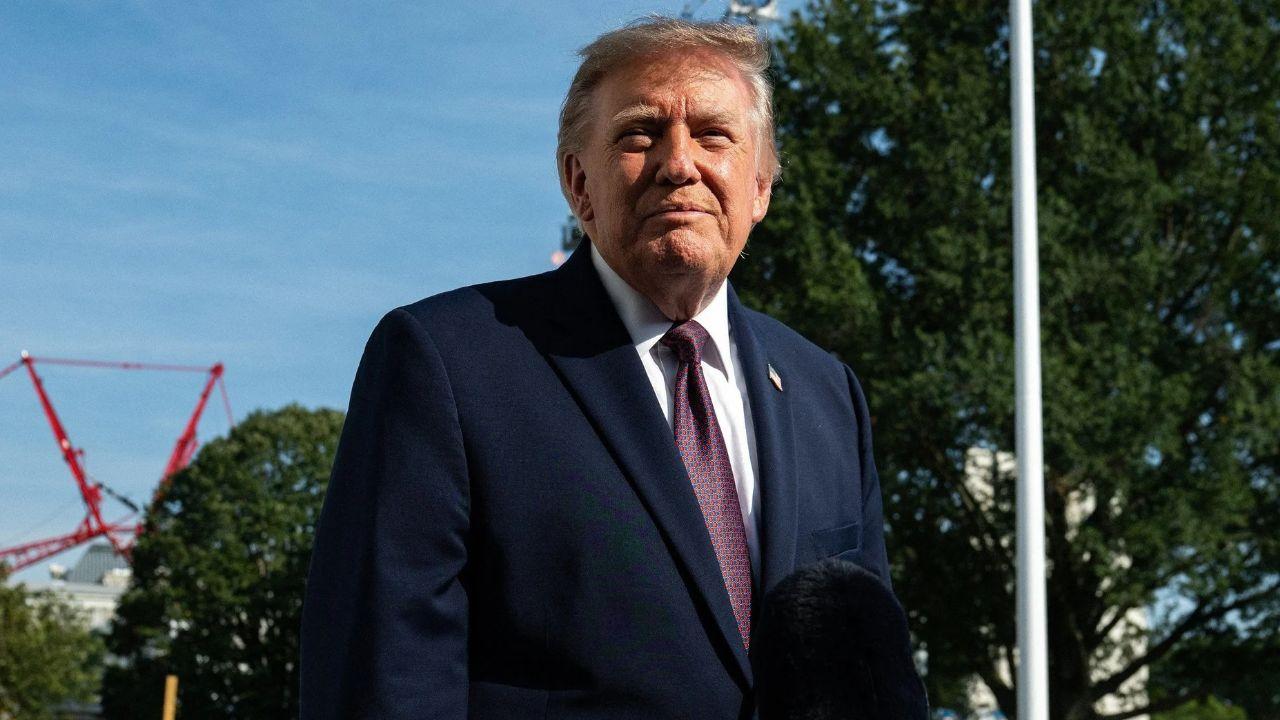
Analysts cited AI investment concerns, inflation and interest-rate uncertainty among factors weighing on stocks.
Despite Trump's criticism, Democrats have not yet assumed control of either chamber of Congress. They won majorities in both the House and Senate in the November 3 elections, but the new Congress is scheduled to begin on January 3, 2027.
Republicans therefore remain in control until the current congressional session ends.
The timing is important because the market sell-off was already underway before Democrats' election victories. The November decline has also been linked to concerns about AI valuations, technology spending, and the broader economic outlook.
Trump's comments came hours after he said it would be "very hard" to work with Senate Democratic Leader Chuck Schumer if Schumer becomes majority leader.
The president's remarks highlight the political tension surrounding the market downturn, although the available market evidence points to several contributing factors rather than a single cause.
