


EXCLUSIVE: Donald's Dictator Shame — Trump 'Revels in Comparisons of His Presidency to Brutal Regimes of Hitler, Mao, Stalin and Genghis Khan'

Trump drew criticism over comparisons to history's brutal dictators.
July 14 2026, Published 2:06 p.m. ET


Donald Trump is being accused of openly indulging in comparisons between his presidency and some of history's most brutal dictators, RadarOnline.com can reveal.
A new book claims the US president, 80, has repeatedly reflected on the nature of absolute power while drawing parallels between his position and those of figures including Adolf Hitler, Mao Zedong, Joseph Stalin and Genghis Khan.
Elite Insiders Expose Unchecked Imperial Presidency

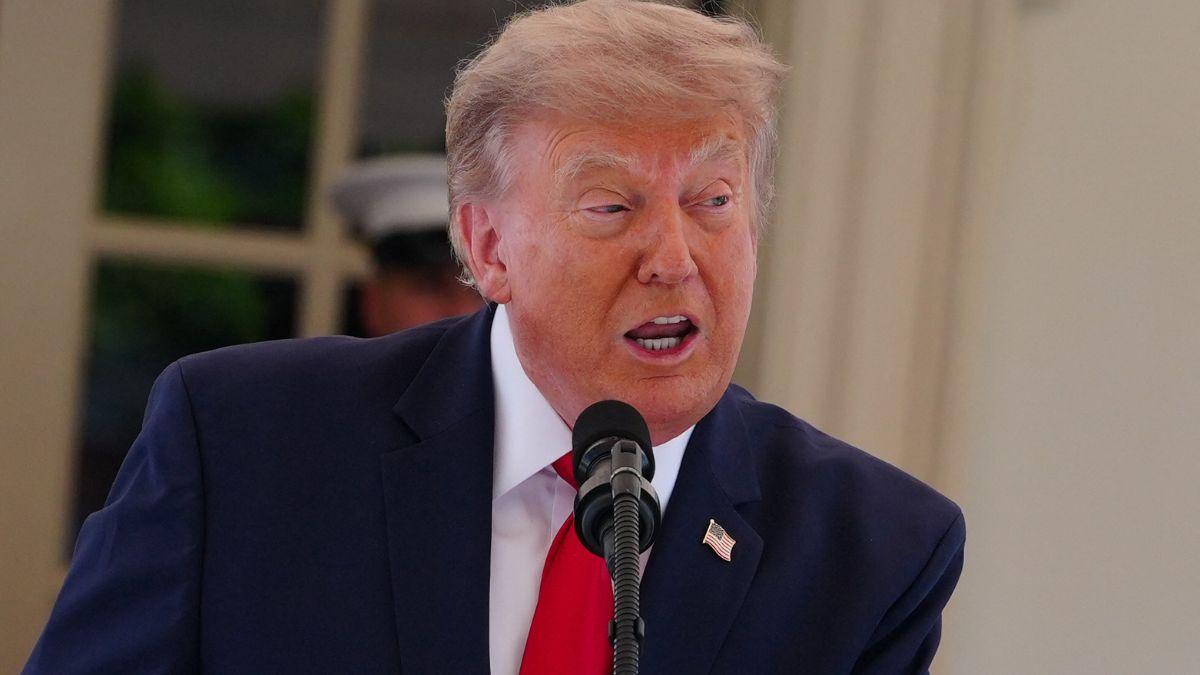
Trump compared modern presidential influence to historical military conquerors.
The allegations are detailed in Regime Change: Inside the Imperial Presidency of Donald Trump, a 464-page book by reporters Maggie Haberman and Jonathan Swan.
Based on extensive interviews with administration insiders who spoke anonymously, alongside direct interviews with Trump, the book examines the MAGA leader's second term in office and alleges he has sought to reshape the federal government, cultural institutions and the political landscape through an increasingly unconstrained exercise of presidential authority.
The authors said they contacted those named throughout the reporting process to give them the opportunity to respond. A source told us: "What emerges is a picture of a president who appears fascinated by the language of power and history.
"The comparisons are less about admiration for the dictators themselves than about measuring their own place alongside the most dominant rulers the world has known. But the effect is still deeply unsettling."
Haberman and Swan describe Trump as the "most powerful president of our lifetimes" – and depict him as a leader driven by "grievances and instincts" whose desire to stamp his personality on the presidency extended from sweeping political changes to unusually personal touches inside the White House.
One anecdote recounts the president using a tube of super glue while decorating parts of the executive mansion, illustrating what the authors portray as his determination to leave a permanent mark on the office, whatever the cost.
Trump Boasts He Outpaces History's Top Tyrants
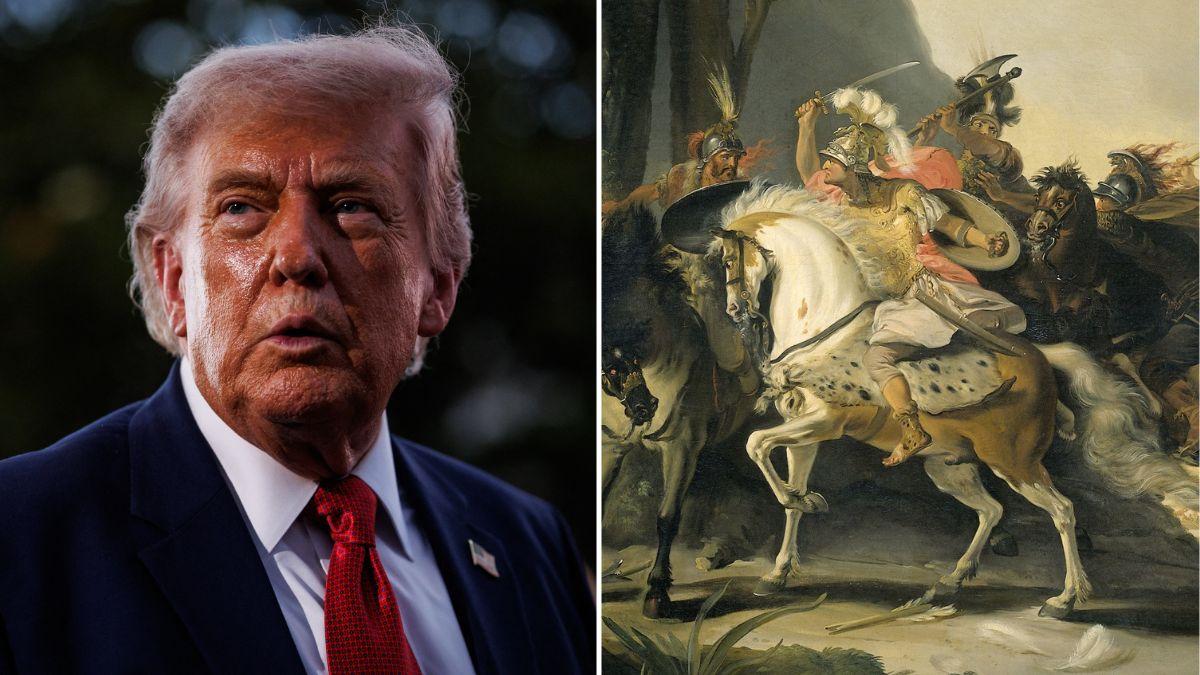
The president noted that Alexander the Great lacked modern airplanes.
The book also recounts a private interview the authors conducted with Trump shortly after the United States launched military action against Iran.
During the conversation, the president reportedly reflected on the reach of his office and compared it with that of some of history's most feared rulers.
According to the book, Trump worked through a two-page document provided by an acquaintance listing influential historical figures before arguing none possessed the worldwide influence available to a modern American president. Referring to military conquerors including Alexander the Great and William the Conqueror, Trump is said to have observed: "They didn't have airplanes."
The discussion then shifted to other infamous rulers.
As quoted in the book, Trump recited the names "Napoleon, Hitler, Mao, Stalin" before noting those brutal leaders "maintained power through fear."
He then remarked, according to Regime Change: "Who would ever do a thing like that? Right?"
Haberman and Swan present the exchange as part of a broader examination of Trump's view of presidential authority, arguing throughout the book his second administration has been defined by an aggressive willingness to challenge long-established political norms while expanding executive influence across multiple branches of government.
The authors contend those close to the president increasingly viewed his approach as one driven less by convention than by instinct, personal loyalty and an enduring belief that history would ultimately judge his presidency alongside the world's most consequential leaders.
Shocking Parallels Drive Bitter Hitler Debate
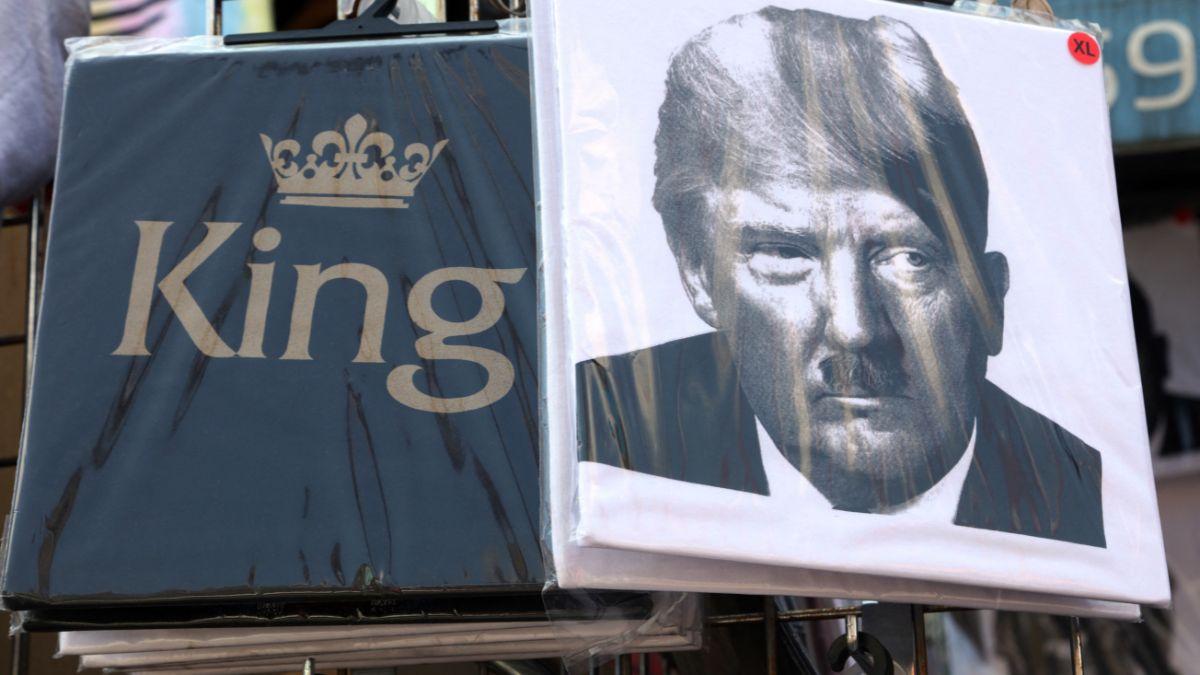
Former Chief of Staff John Kelly alleged Trump privately praised aspects of Hitler.
Comparisons between Trump and Hitler are nothing new.
Critics of the Republican highlight rhetorical similarities and authoritarian tendencies between the pair, while historians and defenders argue the historical contexts and ultimate political ideologies are vastly different.
Trump has used terms like "vermin" to describe political enemies and claimed immigrants are "poisoning the blood of our country" – phrases some historians note echo Nazi-era rhetoric.
Both leaders framed the free press as the "enemy of the people" and actively sought to undermine the legitimacy of democratic institutions, such as the judiciary and electoral processes.
Observers have also drawn parallels between the intense, loyalty-driven atmosphere of Trump's large political rallies and the mass-mobilization techniques used by Hitler in the 1920s and 1930s.
Scholars who study democratic decline have raised alarms over shared authoritarian characteristics.
Both leaders refused to accept electoral defeats, falsely claiming that voting processes were rigged.
Trump has also expressed interest in using the justice system to prosecute political rivals and his contemplation of expanding executive power draws comparisons to the consolidation of dictatorial power.
The comparisons were further fueled by reports from former aides, such as Chief of Staff John Kelly, who alleged Trump privately praised aspects of Hitler's control over his generals.

Scholars Reveal Why Trump Is Not The New Hitler
Never Miss an

Daily updates from the heart of Hollywood, right to your inbox
By entering your email and clicking Sign Up, you’re agreeing to let us send you customized marketing messages about us and our advertising partners. You are also agreeing to our Terms of Service and Privacy Policy.
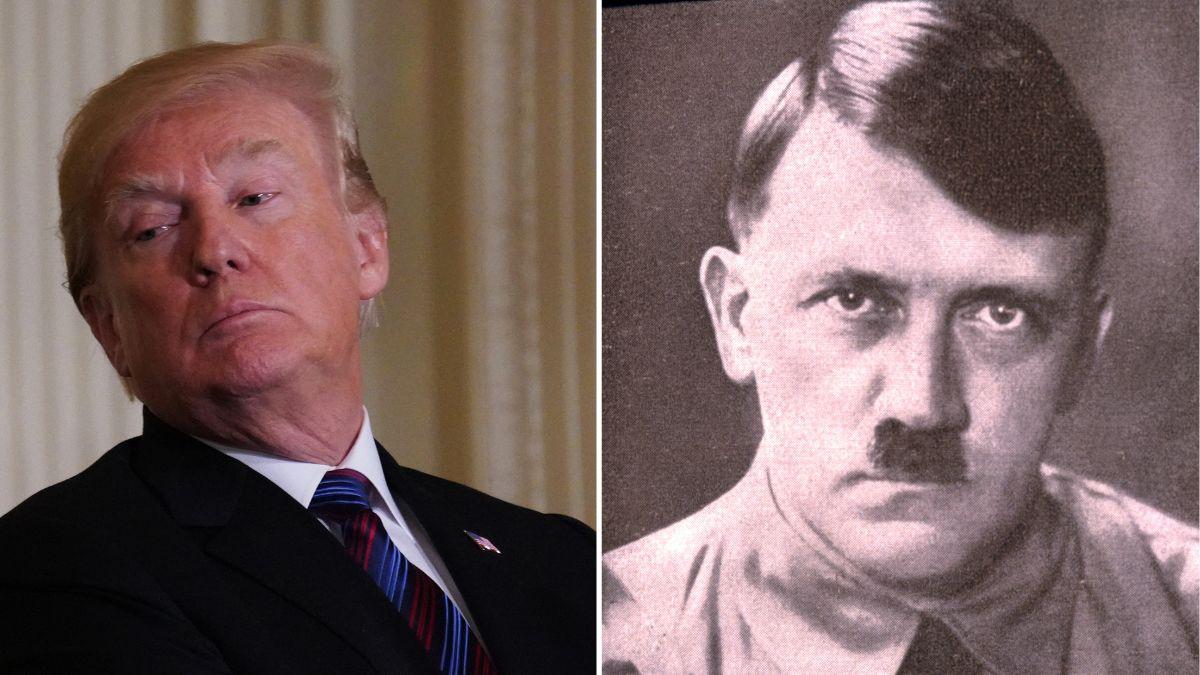
Historians rejected direct comparisons between Trump and Adolf Hitler.
Many historians, as well as groups such as the Anti-Defamation League, reject the "American Hitler" comparison as inaccurate and inflammatory.
They say Hitler's ideology was rooted in explicit, foundational anti-Semitism and a desire for global domination, culminating in the industrialized murder of six million Jewish people and others.
Trump holds no such genocidal ambitions or all-encompassing racial ideology.
Hitler also built his political movement and paramilitary forces entirely from the ground up, ultimately dismantling the fragile democracy of the Weimar Republic by force and manipulation.
But Trump gained power from within an established, two-party democratic system and operated within the confines of constitutional legality.
And unlike Hitler's totalitarian regime, which completely eliminated opposition parties, the press, and civil rights, supporters say Trump has operated within a heavily mediated democratic system where his actions have been constantly challenged by courts, Congress and a free press.
