


Why the Next Generation of Entertainment Fans Are Looking Beyond Hollywood

Sept. 3 2026, Updated 1:03 p.m. ET


For decades, Hollywood played an outsized role in deciding what became culturally relevant in America. The biggest stars, franchises, and entertainment trends typically passed through a familiar set of studios, networks, and gatekeepers before reaching a mass audience.
Streaming and social media have disrupted that model. Younger audiences can now discover a series through TikTok, follow an international actor on Instagram, or find a new genre through a streaming recommendation without caring much about where the content originated.
For the next generation of entertainment fans, geography is becoming far less important than whether something captures their attention.
Anime is one of the clearest examples. Once treated as a niche interest in the U.S., it has become firmly embedded in mainstream entertainment culture. Korean entertainment has helped drive another major shift, challenging the long-held assumption that subtitles are a significant barrier for American audiences.
International stars are benefiting as well. Actors, directors, and franchises can now develop global fan bases without first needing a Hollywood project to introduce them to American audiences.
The result is an entertainment culture increasingly driven by genres, stars, fandoms and recommendations rather than country of origin.

Asian Blockbusters Are Finding a New American Audience
Movies offer another clear example of this shift. Asian films no longer need a traditional Hollywood remake or major U.S. theatrical campaign to find American fans. Streaming has created more opportunities for audiences to discover established stars, major blockbusters, and genres that already command passionate followings overseas.
Amasian TV, a free ad-supported streaming platform dedicated to Asian entertainment from global media company ODK Media, reflects that growing appetite with an expanding lineup of movies available to U.S. audiences. Its slate includes Jackie Chan films such as Ride On, Railroad Tigers, Kung Fu Yoga and Police Story: Lockdown, alongside Donnie Yen titles including the Ip Man films and Raging Fire.
Korean movies such as Exhuma, Emergency Declaration, The Man From Nowhere and The Divine Fury bring disaster, action and supernatural storytelling into the mix. Japanese martial arts titles and Korean horror films also give viewers more opportunities to explore genres with established fan bases in the U.S. The lineup also showcases the scale and ambition of contemporary Chinese cinema, with acclaimed films including Ne Zha, Hidden Blade and the sweeping fantasy epic Creation of the Gods I: Kingdom of Storms.
For audiences, the appeal is increasingly simple: a good movie is a good movie. Making major Asian titles available for free gives viewers more chances to discover films and stars they may not have encountered through traditional Hollywood channels.
Why Japan Is Having a Cultural Moment
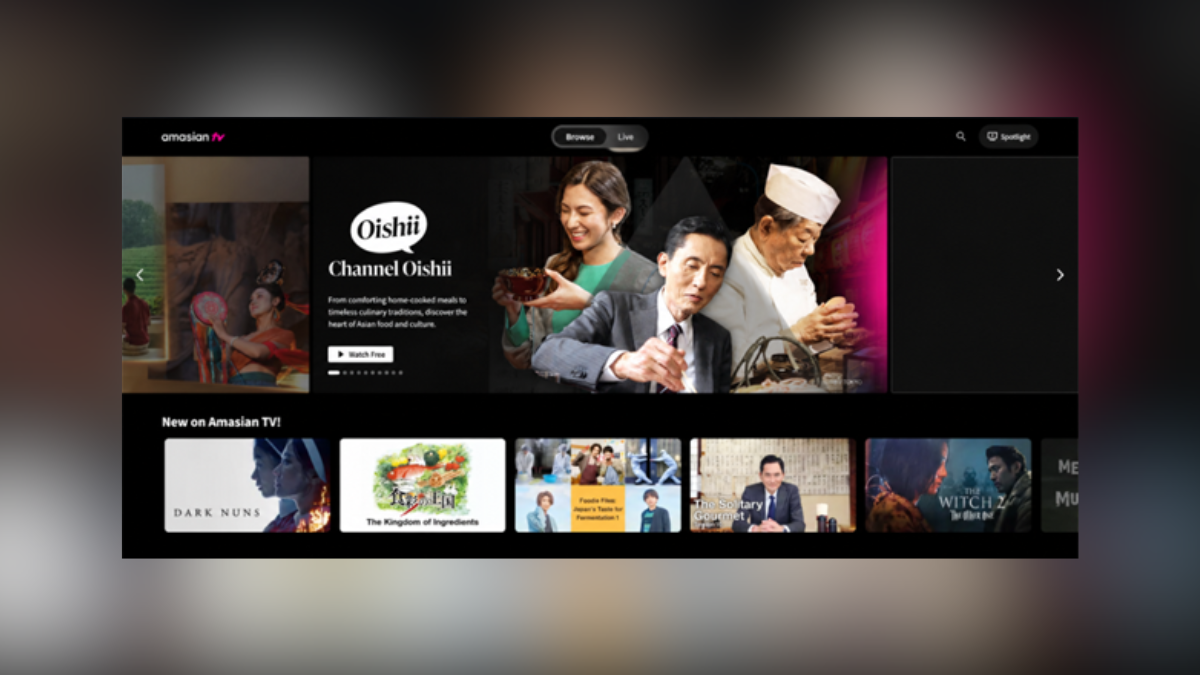
Japan offers a particularly interesting example of how entertainment and broader cultural interests are beginning to overlap.
American fascination with Japan is not limited to anime. Japanese food, travel, gaming and lifestyle have become increasingly visible in popular culture, giving audiences multiple entry points into the country's entertainment.
Japan welcomed more than 42 million international visitors in 2025, underscoring the global appetite for its cultural experiences. For viewers at home, entertainment can offer another window into that interest.
Japanese food culture is one area where those worlds are converging. ODK Media recently launched Channel Oishii on Amasian TV, a free 24/7 streaming channel centered on Japanese food culture, with dramas, documentaries, anime and travel programming.
The lineup includes The Solitary Gourmet (Kodoku no Gurume), which follows a traveling salesman's solo dining adventures across Japan, alongside Shibuyummy, a series exploring Tokyo's food scene.
Programming like this shows how a viewer's existing interests can become a gateway to international entertainment.
Free Streaming Is Lowering the Barrier to Discovery
The way audiences pay for entertainment is also influencing what they discover.
With consumers already juggling multiple subscriptions, signing up for another service to try an unfamiliar movie or series can be a hurdle. Free ad-supported streaming removes some of that friction by allowing viewers to sample programming without another monthly commitment.
Amasian TV uses free streaming to make Asian movies, series, and cultural programming more accessible to U.S. viewers. That type of access can help niche fandoms expand beyond their original communities as viewers discover new titles and share them through social media and online fan communities.

Never Miss an

Daily updates from the heart of Hollywood, right to your inbox
By entering your email and clicking Sign Up, you’re agreeing to let us send you customized marketing messages about us and our advertising partners. You are also agreeing to our Terms of Service and Privacy Policy.


Does "Foreign Content" Still Make Sense?
Perhaps the biggest shift is not simply what younger audiences are watching, but how they categorize it.
Hollywood remains a major force, but it is no longer the sole gateway to American cultural relevance. Audiences have more control over discovery, and younger fans in particular are following whatever captures their interest.
The question is no longer whether "foreign content" can compete with Hollywood. It's whether the term still makes sense at all.
