


EXCLUSIVE: Radar Reveals the 'Last Ditch' Methods Europe Could Use to Block Trump From Seizing Greenland

Donald Trump is still all about purchasing Greenland.
Feb. 15 2026, Published 3:00 p.m. ET


Donald Trump is still on a mission to gain control of oil-rich Greenland – and RadarOnline.com can reveal European leaders are now weighing what officials describe as "last-ditch" methods to block him from seizing the Arctic territory.
The Trump administration has justified its position from the standpoint of "national security," warning it will "do something" about Greenland, "whether they like it or not."
'The End of NATO'

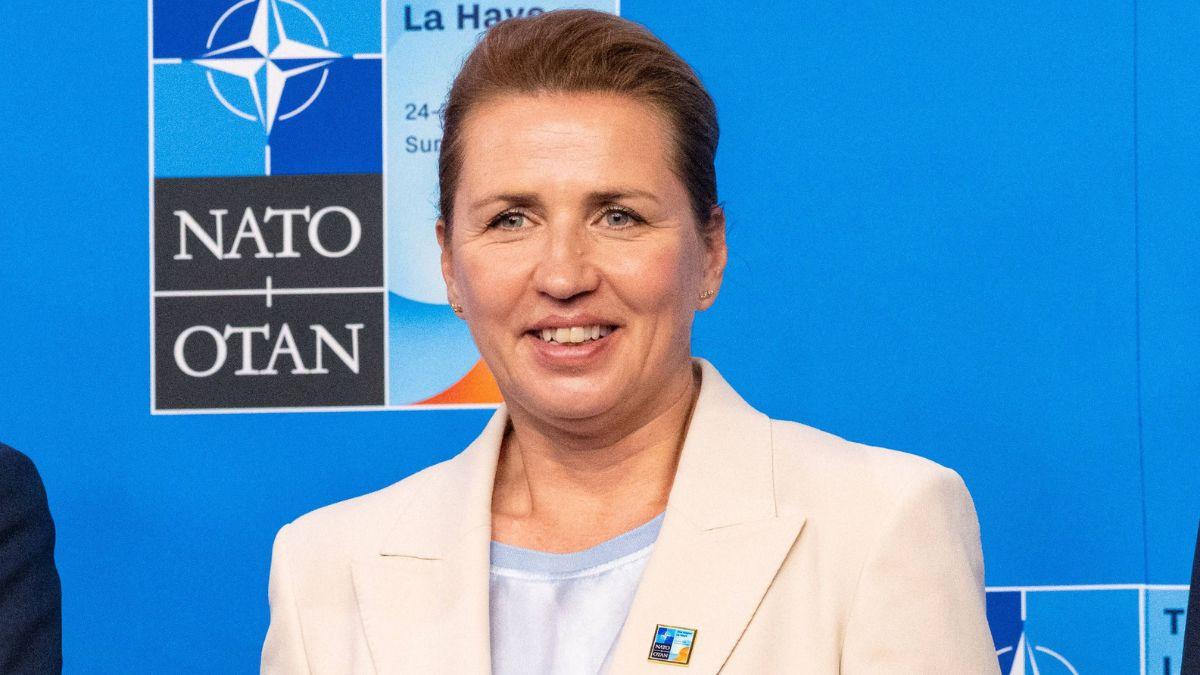
Denmark's Prime Minster, Mette Frederiksen, has warned that an invasion would end NATO as it stands.
Greenland, a largely self-governing territory within the Kingdom of Denmark, is not a member of the European Union, but Denmark is – and the island is covered by Nato guarantees through Copenhagen's membership.
That legal and political overlap has placed the EU and the transatlantic alliance in a difficult position, with sovereignty, territorial integrity, and alliance unity at stake.
Diplomatic efforts are already underway. Denmark's ambassador to Washington, Jesper Møller Sørensen, and Greenland's envoy, Jacob Isbosethsen, have been lobbying U.S. lawmakers over Trump's plan.
Officials are expected to emphasize a 1951 U.S.-Danish defense treaty – updated in 2004 – already allows for significant expansion of the American military presence on the island, including new bases.
Denmark's Prime Minister, Mette Frederiksen, has framed the stakes starkly, warning any U.S. attack on or invasion of Greenland would mean "the end of Nato."
A European diplomatic source said: "The core message being delivered to Washington is that Nato is built on mutual obligation – solidarity is not a one-way street. If one ally begins to disregard the sovereignty of another, the entire foundation of the alliance is called into question. That is something European capitals take extremely seriously."
EU Warns of Last-Ditch Measures
NATO ambassadors have agreed to boost Arctic military spending.
The source added, "If the United States were to act unilaterally over Greenland, Europe would be compelled to respond. It would not be a symbolic protest or a strongly worded statement – it would trigger last-ditch measures designed to protect Greenland's territorial integrity and uphold international law.
"No one wants escalation, but European governments are making clear that they cannot simply stand aside if the rules-based order is breached from within the alliance itself."
Nato ambassadors are said to have agreed to increase Arctic military spending, expand exercises, and deploy additional equipment.
European officials have also floated modeling a security push on Baltic Sentry, a Nato mission to protect infrastructure in the Baltic Sea, and Eastern Sentry, aimed at countering threats on Europe's eastern flank.
Diplomats privately acknowledge while Trump's claim that Greenland "is full of Chinese and Russian ships everywhere" is exaggerated, a coordinated Western security initiative could offer a face-saving compromise.
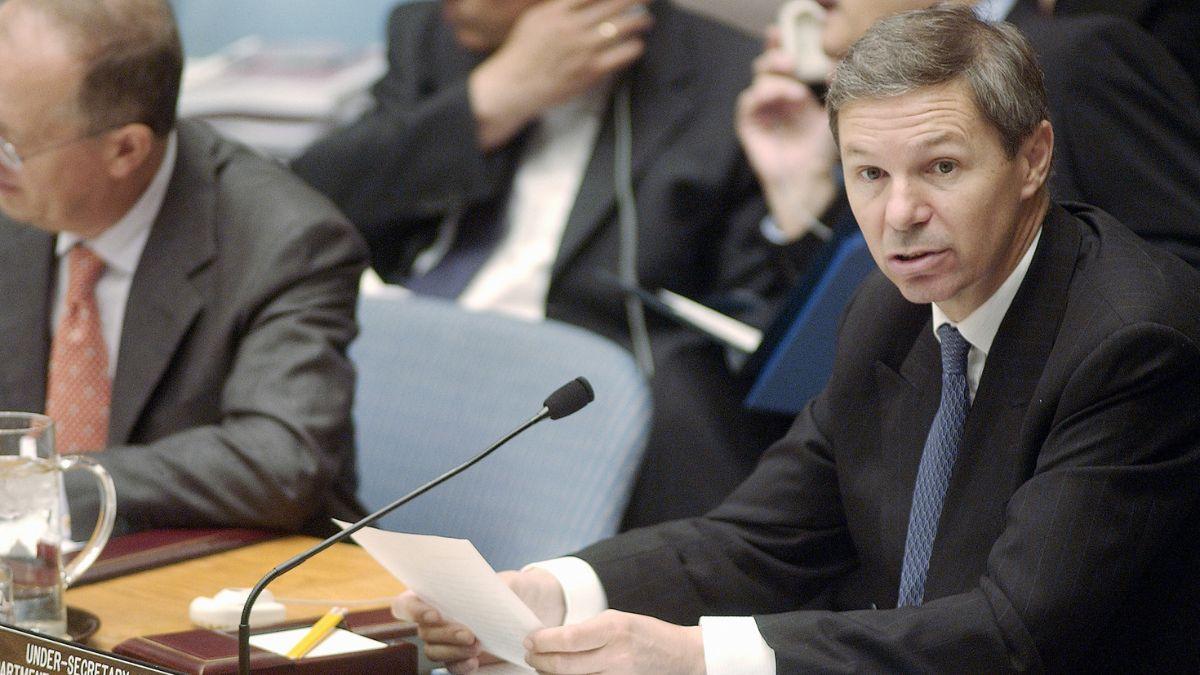
Former UN official Jean-Marie Guéhenno warned that Europe's digital and defense sectors are dangerously dependent on the U.S.
Economic leverage is another option. The E.U.'s anti-coercion instrument – dubbed the "trade bazooka" – would allow the European Commission to bar U.S. goods and services, impose tariffs, and restrict investments. But that tool requires unanimous political will.
Jean-Marie Guéhenno, a former senior U.N. official, warned: "Whether it is data protection, artificial intelligence or software updates, including for defense, Europe remains at the mercy of American goodwill."
Greenland's economic dependence on Denmark has also drawn scrutiny. A draft European Commission proposal from September suggests doubling E.U. financial commitments to the island to match Denmark's grant, with additional funding available for remote associated territories.
One E.U. official said: "If Trump talks about pouring billions into Greenland, the European response would not be to match rhetoric with rhetoric, but to offer a credible, long-term partnership. Brussels has the capacity to structure sustained investment, infrastructure funding, and economic cooperation that ties Greenland's future to Europe in a stable and predictable way."
The source added: "The strategic objective would be to ensure Greenland remains economically anchored in Europe – not abruptly pulled into Washington's orbit by headline-grabbing promises.
"Financial support from the E.U. would be framed not as a bidding war, but as a reinforcement of existing ties with Denmark and the broader European framework. The message is that Greenland's prosperity and autonomy are best secured through steady partnership rather than sudden geopolitical realignment."

'Repercussions Would Be Profound'

Never Miss an

Daily updates from the heart of Hollywood, right to your inbox
By entering your email and clicking Sign Up, you’re agreeing to let us send you customized marketing messages about us and our advertising partners. You are also agreeing to our Terms of Service and Privacy Policy.
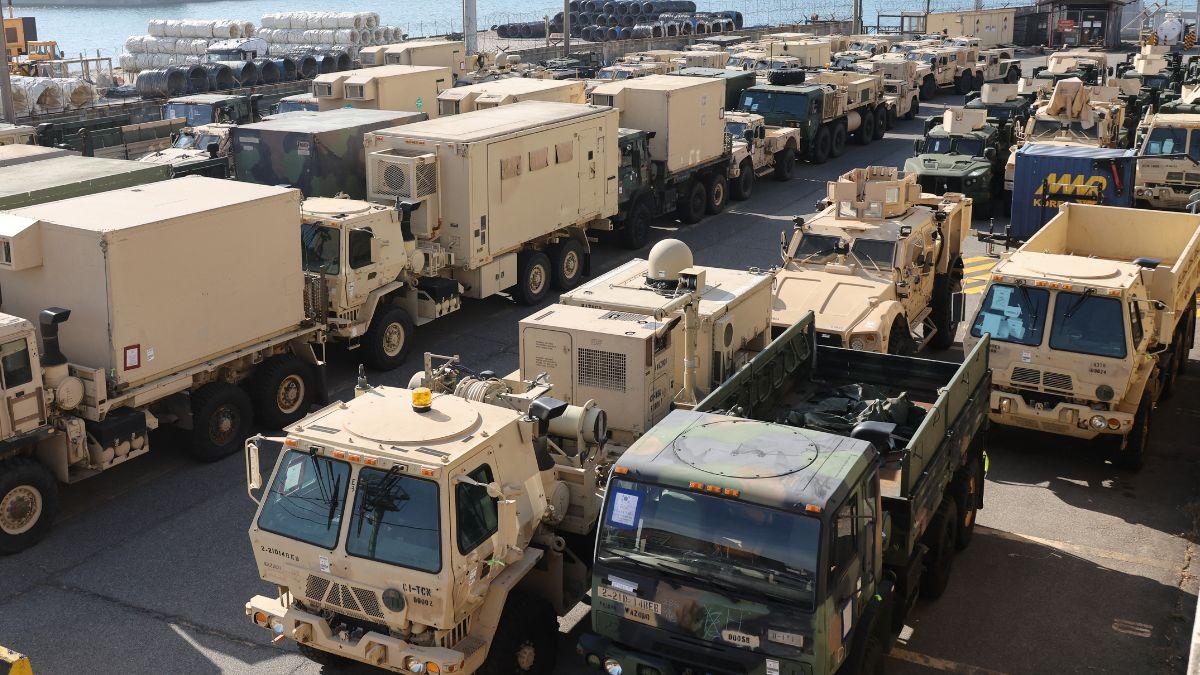
Security experts warned that a military move would fracture transatlantic relations.
The most dramatic proposal involves troop deployment.
In a paper for the Bruegel think tank, economists Moreno Bertoldi and Marco Buti argued E.U. governments should "proactively protect Greenland from U.S. expansionism" and activate the bloc's rapid deployment capacity of up to 5,000 troops.
They wrote European forces should be stationed on the island "as a signal of Europe's commitment to Greenland's territorial integrity."
Germany's government spokesperson said Berlin was developing plans "including European deterrence," while France's foreign minister, Jean-Noël Barrot, previously raised the possibility of a French contingent.
One global security expert said, "There is no serious voice in Europe arguing that a confrontation between the U.S. and the E.U. would be either desirable or capable of producing a winner. The economic, political, and security costs on both sides would be immense. It would fracture decades of cooperation that underpin the transatlantic relationship."
They also warned: "However, if the United States were to undertake a military move against territory linked to an E.U. member state, the repercussions would be profound.
"Defense collaboration would be severely damaged, financial markets would react sharply to the instability, and Washington's credibility as a reliable ally would suffer globally. The shockwaves would extend far beyond Greenland, reshaping how partners and adversaries alike view America."
