


Donald Trump's Son Eric Backed Startup Misses Payroll as Former Synapse CEO's $4.6Million Home Loan Draws Scrutiny

Eric Trump backed company has failed to pay its employees since missing payroll last month
Nov. 14 2026, Published 2:35 p.m. ET


Foundation Future Industries, the humanoid robotics startup backed by Eric Trump, has failed to pay employees after missing its October payroll, as CEO Sankaet Pathak faces questions over a $4.6 million loan he took from the company to purchase a luxury home.
According to a November 14 report by CNBC, citing people with direct knowledge of the situation, the San Francisco-based company missed its October 30 payroll, and workers had still not received their wages as of November 14.
The financial troubles have reportedly angered employees, particularly because Pathak borrowed millions from the company while its cash reserves were shrinking.
The former Synapse CEO is now seeking additional investment to keep the robotics business running and cover its outstanding payroll obligations.
Foundation Future Industries Misses Payroll Amid CEO's $4.6Million Loan


Eric Trump backed company missed its payroll last month and the employees have not received their paychecks yet
People familiar with Foundation's finances told CNBC that Pathak borrowed $4.6 million from the company last year to purchase a property in Sausalito, California.
Public records show that an LLC listing Pathak as its sole principal acquired the property in October 2025. The home was purchased for $4.6 million and reportedly offers expansive views of San Francisco Bay.
Pathak reportedly described the money as a short-term loan. Existing investors learned about the arrangement through the company's financial disclosures, according to the people who spoke to CNBC.
A spokesperson for the CEO acknowledged receiving a detailed list of questions from the news outlet but did not provide a response.
In a memo circulated to employees during the week of November 14, Pathak said he was working to secure additional funds to cover overdue wages, according to people familiar with the message.
This is not the first time Foundation has struggled to meet its payroll obligations. The company also missed a payment in August, although employees reportedly received their money approximately two days late after an existing investor provided a bridge loan.
Eric Trump's Investment and Foundation's Corporate Governance Raise Questions

Eric Trump has been an investor and chief strategy advisor for Foundation
Eric was introduced as an investor and chief strategy adviser to Foundation during an April 2026 interview. However, the exact size of his financial stake in the company has not been disclosed.
His involvement is separate from the company's day-to-day management. A spokesperson for the president's son previously told the Financial Times that he had no role in the Foundation's management, operations, strategic decisions, or government contracting.
CNBC also reported that Pathak serves as the company's sole board member and holds a majority of its shares. The arrangement has raised governance concerns, particularly because it allowed him to borrow money directly from the business.
Pathak has reportedly been attempting to raise hundreds of millions of dollars since at least January, with Foundation seeking a valuation of approximately $3 billion.
Founded in April 2024, Foundation was established by Pathak, Tribe Capital CEO Arjun Sethi and Cobalt Robotics co-founder Mike LeBlanc. The company is developing its Phantom humanoid robots for industrial and military applications.
Its reported $24 million in Pentagon contracts has also attracted scrutiny.
CNBC reported that the figure relates to government research contracts held by Boardwalk Robotics, which Foundation acquired in late 2024, rather than new contracts independently secured by Foundation. Some performance milestones associated with the acquired work reportedly remain unmet.
Former Synapse CEO Sankaet Pathak's Previous Startup Collapsed in 2024

Jelena McWilliams claimed that customer funds worth $96 million went missing
Foundation's financial difficulties have renewed attention to Pathak's previous business, fintech company Synapse, which filed for Chapter 11 bankruptcy in April 2024.
The collapse left more than 100,000 customers unable to access approximately $265 million in deposits. Customers had been led to believe their money was protected by FDIC insurance through Synapse's banking partnerships.
Bankruptcy proceedings exposed a significant discrepancy between customer account records and the money held by partner banks.
Former FDIC Chair Jelena McWilliams, who served as the bankruptcy trustee, identified a potential shortfall of as much as $96 million.
Pathak also faced scrutiny over personal borrowing from his former company. Fintech consultant Jason Mikula reported that internal records showed the executive received two personal loans totaling $320,000 in December 2023 and January 2024, as Synapse was approaching bankruptcy.
Pathak's borrowing was also discussed in connection with the company's financial troubles.
The Wall Street Journal separately reported in February 2025 that federal prosecutors in New York had convened a grand jury to investigate possible criminal misconduct connected to Synapse's collapse.
The investigation reportedly examined missing customer funds and financial discrepancies. The existence of an investigation does not establish criminal wrongdoing by Pathak.
Synapse's Collapse Led to Regulatory Action and Continued Scrutiny

Never Miss an

Daily updates from the heart of Hollywood, right to your inbox
By entering your email and clicking Sign Up, you’re agreeing to let us send you customized marketing messages about us and our advertising partners. You are also agreeing to our Terms of Service and Privacy Policy.
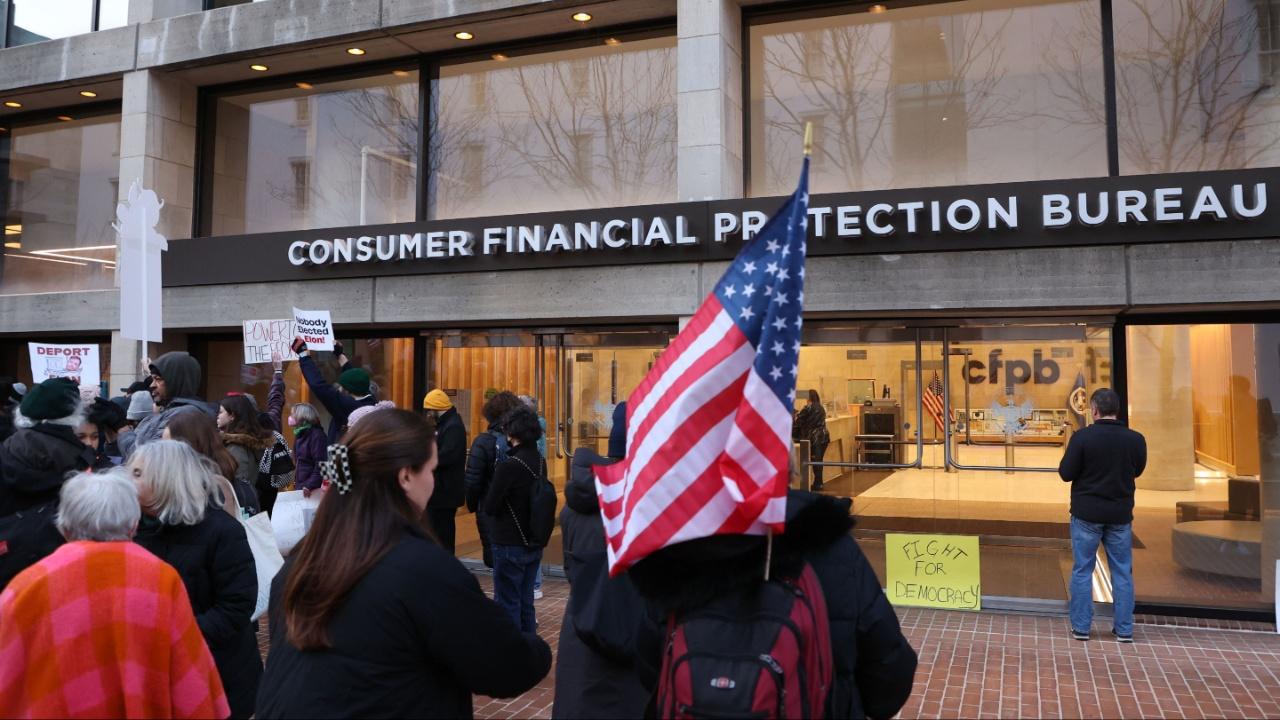
Sankaet Pathak's previous company Synapse was sued by Consumer Financial Protection Bureau
Synapse and its former banking partner, Evolve Bank & Trust, disputed responsibility for the missing customer funds, with each side blaming the other for the financial discrepancies.
The Consumer Financial Protection Bureau also pursued legal action against Synapse. In August 2025, the agency filed a complaint alleging that the company failed to maintain adequate records tracking customer money. A court entered a stipulated judgment in September 2025, providing for injunctive relief and allowing the CFPB to access its Civil Penalty Fund to address consumer harm.
