


EXCLUSIVE INVESTIGATION: Gas Station Heroin Outbreak — How Deadly Over-the-Counter Epidemic is Poisoning the Nation

A deadly gas station heroin epidemic is spreading rapidly across communities nationwide.

June 15 2026, Published 8:00 a.m. ET


America is in the throes of a deadly new drug epidemic involving tianeptine – a highly addictive substance that's so widespread it's known as gas station heroin, RadarOnline.com can reveal.
Marketed as dietary supplements, tianeptine products are legal in most states and have become an over-the-counter hit with teens and young adults looking for a quick mood boost, increased mental agility, dietary aids or to help manage chronic pain.
Gas Station Drug Sparks Alarm

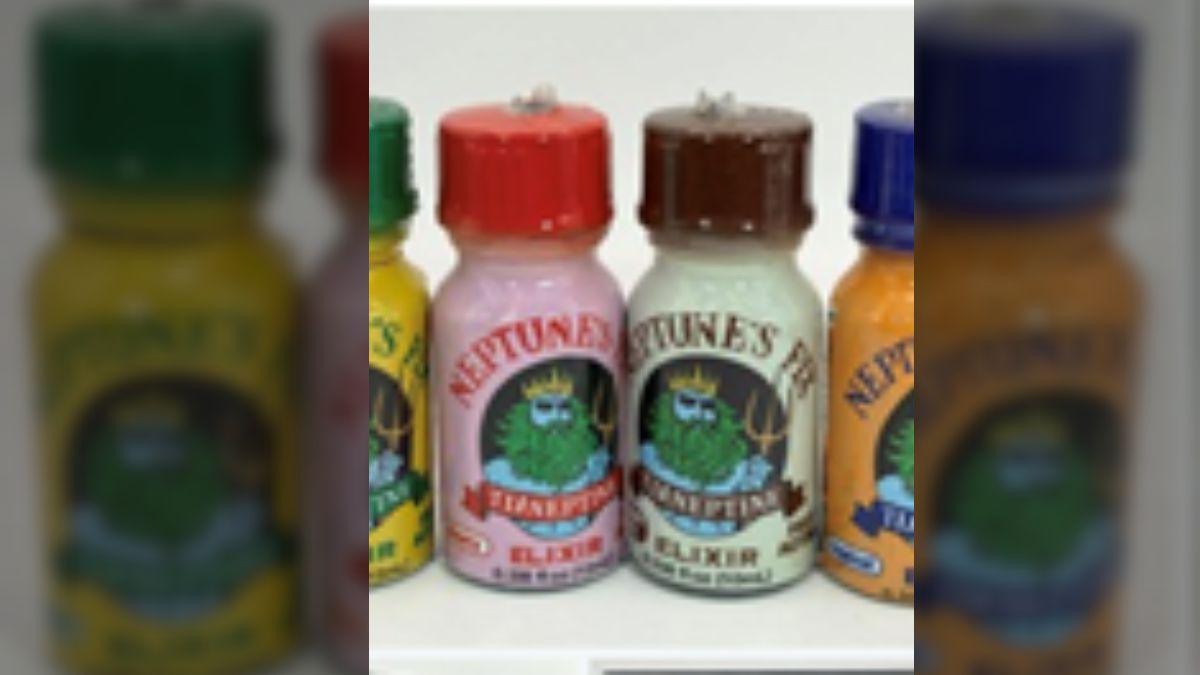
Doctors warned tianeptine products sold under names like ZaZa and Neptune's Fix can trigger opioid-like addiction and severe withdrawal symptoms.
Their flashy packaging has become ubiquitous at gas station checkout counters, vape shops and convenience stores across America, having been sold under brand names including Tianaa, Neptune's Fix, ZaZa, TD Red and Pegasus Silver.
The substance, which stimulates the same brain receptors as opioids like heroin, oxycodone and fentanyl, can be addictive, said experts who caution it can also cause respiratory depression and severe sedation – and may be fatal at higher doses.
Users reported euphoric effects and pain relief similar to opioids, but said those benefits are quickly overshadowed by agonizing withdrawal symptoms such as insomnia, shakes, nausea, anxiety and even seizures.
"I was told that it's harder to break this addiction than it is to break a heroin addiction," said Dr. Bob Baker, coroner in Fayette County, Pa., which recorded its first fatality from the drug in April.
"Whatever you're buying," Baker said, "we have no idea about the levels of what's in it."
The Food and Drug Administration has issued multiple dire warnings about tianeptine as anecdotal reports of its deadly and devastating toll mount.
Overdoses and Deaths Mount Nationwide
Karen Haggarty said her son Chris died after buying a bottle of tianeptine elixir from an Ohio gas station.
From June 2023 to early 2024, New Jersey was rocked by 41 tianeptine overdoses. Soon after, Neptune Resources – the maker of Neptune's Fix – issued a voluntary nationwide recall.
On Nov. 5, 2023, Chris Haggarty died of an OD after buying a bottle of tianeptine elixir at an Ohio gas station that was selling it illegally, as the state is one of 12 that has banned the drug.
"I miss him dearly," said Haggarty's bereaved mom, Karen. "Fifteen dollars a bottle. How many people bought it besides my son? It was for sale at the gas station just right next to the lottery tickets and the cigarettes."
In 2019, Johnathon Morrison, a 19-year-old University of Alabama student, fatally choked on his own vomit after purchasing a bottle of Tianaa to treat a migraine headache from a local gas station that didn't have Excedrin.
Family Left Searching for Answers

University of Alabama student Johnathon Morrison died after taking Tianaa purchased from a local gas station, according to his family.
His mother, Kristi Terry, and 15-year-old sister found him dead in his bedroom the following morning – next to the near-empty bottle on his nightstand.
"He had no clue what he was taking," said Terry. "They told him that it was all natural, herbal, and that it was like a powerful Tylenol."
Prior to 2014, tianeptine was barely known in the U.S., despite being used in France since the 1960s to treat depressive disorder. Today, 60 countries worldwide prescribe the drug under the direction of a physician.
In America, tianeptine is neither banned by the Drug Enforcement Administration nor regulated by the FDA.


Calls Grow for Nationwide Ban

Never Miss an

Daily updates from the heart of Hollywood, right to your inbox
By entering your email and clicking Sign Up, you’re agreeing to let us send you customized marketing messages about us and our advertising partners. You are also agreeing to our Terms of Service and Privacy Policy.

Michigan became the first state to ban tianeptine in 2018 by classifying the drug alongside cocaine and fentanyl.
Sources said that without federal guidelines, its use has exploded – particularly among junkies and recovering addicts – with poison control centers across the nation reporting an alarming 1,200 percent leap in tianeptine emergencies from 2015 to 2023.
In 2018, Michigan became the first state to outlaw sale of the drug, categorizing it as a Schedule II controlled substance – the same designation as cocaine and fentanyl. Bipartisan federal legislation was introduced to classify tianeptine as a Schedule III drug in 2024, but has yet to pass.
Advocates and those touched by tragedy have called for a nationwide ban in the wake of cases such as Mobile, Ala., man Chris Ricks, who spent a week in the hospital in 2021 after overdosing on four bottles of ZaZa.
Ricks, who's been sober since the incident and spent as much as $80,000 in one year on tianeptine products, recalls, "Within a month of taking those, I looked in the mirror and said, 'You're either headed back to rehab or death.'"
