


From Compliance to Cyber Resilience: The Business Value of SBOM Services

July 23 2026, Updated 1:00 p.m. ET


For many organizations, Software Bills of Materials were initially viewed as another compliance requirement. They appeared on procurement questionnaires, regulatory guidance and software security checklists, particularly after governments began strengthening software supply chain security expectations. That perception is changing.
Business leaders now understand that software transparency gives value beyond just regulatory obligations. As companies become more dependent on complex software ecosystems, understanding what exists inside every application has become essential for managing operational risk.
Modern software is built using hundreds or even thousands of open source libraries, commercial components, container images, and third-party dependencies. Every one of those components introduces potential vulnerabilities that can affect business operations, customer trust and regulatory compliance.
This growing complexity explains why SBOM Services are becoming part of broader cyber resilience strategies. Rather than focusing only on documentation, organizations are using Software Bills of Materials to improve visibility, accelerate vulnerability response, and strengthen software supply chain security.
Why Compliance Started the Conversation
The software supply chain has become one of the most closely examined areas of cybersecurity. Major incidents such as SolarWinds and Log4Shell demonstrated that trusted software could become an entry point for large-scale attacks. Many organisations discovered they had little visibility into the components running inside their own applications.
Governments responded by introducing stronger software security guidance. Executive Order 14028 encouraged greater software transparency for suppliers serving the United States federal government. NIST and CISA subsequently expanded guidance supporting Software Bills of Materials and software supply chain risk management.
These developments encouraged many organizations to invest in SBOM Services primarily to satisfy customer requirements and procurement expectations. That remains important. However, compliance alone rarely delivers lasting security improvements.

Why Cyber Resilience Matters More
Compliance demonstrates that controls exist. Cyber resilience demonstrates that those controls continue working when unexpected events occur. The distinction matters.
A newly disclosed vulnerability can affect thousands of organizations within hours. Businesses that understand their software inventories can identify affected systems almost immediately. Those without software visibility often spend days locating vulnerable components before remediation even begins. That delay creates unnecessary operational risk.
SBOM Services reduce uncertainty by providing accurate software inventories that security teams can use throughout the entire application lifecycle. Instead of reacting blindly, organizations respond with confidence.
Beyond Documentation
An SBOM is often compared to an ingredients list. That comparison explains what an SBOM contains, but it does not explain its business value.
The document itself is only the starting point. The real value of SBOM Services comes from continuously analyzing software inventories against vulnerability intelligence, identifying outdated components and supporting informed security decisions.
Modern companies integrate SBOM data into vulnerability management, software development, incident response and third-party risk management. This transforms software transparency into an operational capacity instead of just a compliance exercise.
How SBOM Services Support Business Functions
Although security teams often lead implementation, the benefits extend across multiple departments.
1. Security Teams
Security analysts gain accurate software inventories that improve vulnerability management and incident response.
2. Development Teams
Developers identify outdated libraries earlier, reducing technical debt and improving software quality before production deployment.
3. Procurement Teams
Software suppliers can be evaluated with greater confidence when component transparency becomes part of procurement decisions.
4. Compliance Teams
Regulatory reporting becomes more consistent because software composition data is readily available.
5. Executive Leadership
Business leaders gain better visibility into software supply chain risk, helping support informed operational decisions.
This broad organizational value explains why SBOM Services continue expanding beyond traditional cybersecurity programmes.
Business Benefits of SBOM Services
The value of SBOM Services extends far beyond regulatory compliance. Organizations increasingly use them to:
- Improve software transparency
- Accelerate vulnerability identification
- Strengthen software governance
- Support third-party risk management
- Improve operational resilience
- Reduce software supply chain uncertainty
- Support regulatory reporting
- Improve customer confidence
These benefits continue to grow as software ecosystems become more and more interconnected.
From Compliance to Resilience
The transition from compliance to cyber resilience follows a sequence that firms can build into existing security programmes.
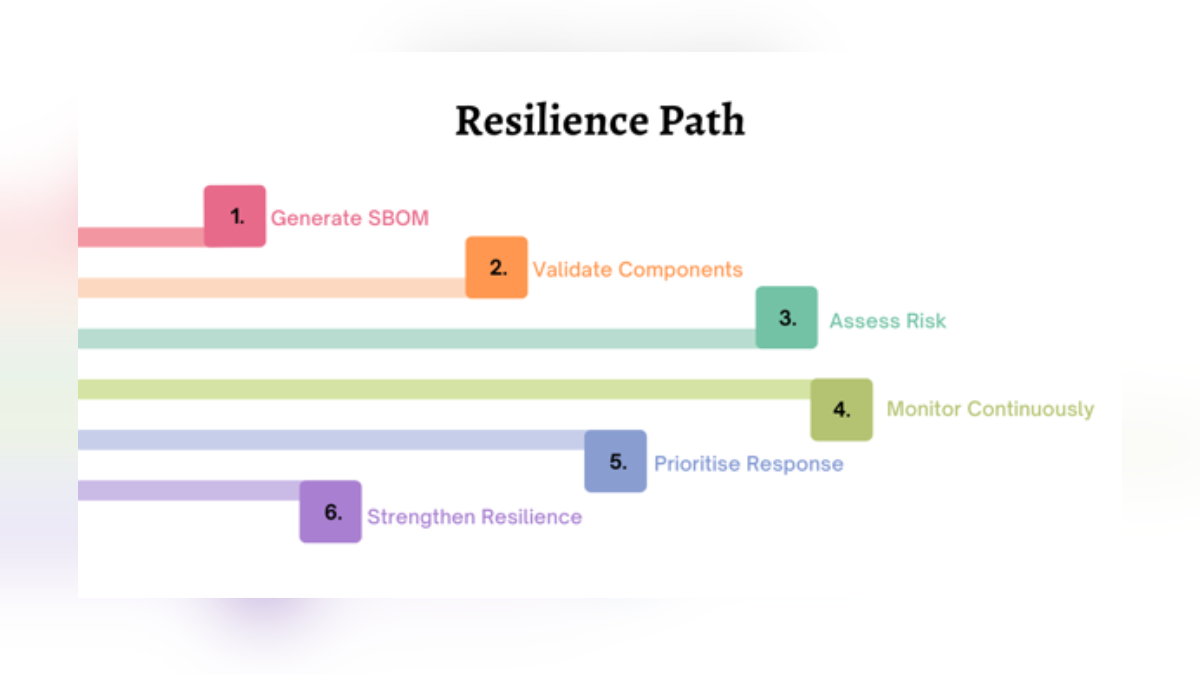
- Generate SBOM: Create an accurate inventory of software components.
- Validate Components: Review dependencies for accuracy and completeness.
- Assess Risk: Match components against known vulnerabilities.
- Monitor Continuously: Track newly disclosed vulnerabilities across software inventories.
- Prioritise Response: Focus remediation efforts on applications with the greatest business impact.
- Strengthen Resilience: Improve long-term software governance and operational readiness.
Software Supply Chains Continue To Expand
Modern applications do not operate in isolation. They connect with cloud platforms, external APIs, commercial software providers and open-source ecosystems.
Each connection creates additional dependencies. Each dependency requires visibility. Without that visibility, organizations struggle to answer straightforward questions during security incidents:
- Which applications contain vulnerable components?
- Which suppliers are affected?
- Which business services require immediate attention?
SBOM Services provide the software intelligence needed to answer these questions quickly. Instead of manual investigation, security teams work from verified software inventories that support faster decision-making.
Why Organisations Are Investing Now

Never Miss an

Daily updates from the heart of Hollywood, right to your inbox
By entering your email and clicking Sign Up, you’re agreeing to let us send you customized marketing messages about us and our advertising partners. You are also agreeing to our Terms of Service and Privacy Policy.


Several factors are driving wider adoption of SBOM Services.
- Software supply chain attacks continue to evolve.
- Customers increasingly request greater software transparency.
- Regulatory expectations continue to mature.
- Executive leadership expects stronger operational resilience.
At the same time, organizations recognize that software inventories support multiple business functions rather than serving only compliance teams. The investment therefore delivers value across cybersecurity, procurement, governance and business continuity. This broader return explains why SBOM Services have become part of long-term cybersecurity planning across many industries.
Building a Sustainable Sbom Strategy
Successful implementation requires more than generating Software Bills of Materials. Organizations should establish processes that integrate software inventory management into development pipelines, vulnerability management, and security operations.
Automation plays an important role because software environments change continuously. Regular validation helps ensure SBOM data remains accurate. Integration with vulnerability intelligence enables faster identification of affected applications when new security issues emerge.
Most importantly, organizations should treat SBOM Services as an ongoing operational capability rather than a project completed once for compliance purposes. That approach creates lasting business value while strengthening overall cyber resilience.
Conclusion
Software supply chain security has become a strategic business concern rather than a technical issue managed only by security teams. As software ecosystems grow more complex, companies need better visibility into the components powering their applications.
While compliance requirements have accelerated adoption, the real value of SBOM Services lies in improving cyber resilience. Accurate software inventories support faster response, stronger software governance, better third-party risk management and greater operational confidence.
Organisations that integrate SBOM Services into their long-term security strategy can respond to emerging threats while meeting evolving regulatory and customer expectations.
CyberNX can help organisations implement advanced SBOM Services that improve software visibility, strengthen software supply chain security, support compliance and enable continuous monitoring across modern application environments. If your organisation is looking to strengthen cyber resilience through effective SBOM Services, connect with the experts at CyberNX to discuss the right solution for your environment.
