


Bratukhin Sergey Borisovich on Identity, Migration and the Camera

Aug. 12 2026, Updated 12:56 p.m. ET


Sergey Bratukhin's biography is often described through movement: Almaty, Europe, Dubai, and more than a decade of work between cities, cultures, and visual languages. But the more interesting part of that biography is not only where he lived or worked. It is how movement shaped the way he looks at people who live between homes. Read this way, Sergey Bratukhin's biography becomes less a list of relocations and more a record of how migration shaped his visual language.
In professional profiles, Bratukhin is usually introduced as a Dubai-based photographer and visual artist of Kazakh origin. His projects, including “Invisible Borders” and “Between Calls,” sit somewhere between documentary photography and conceptual portraiture. They are quiet, restrained, and often focused on emotional distance that does not immediately show on a face.
In this Q&A, Bratukhin Sergey speaks about migration, trust, Dubai, smartphone images, and why the most important photograph often begins before the camera is raised.

Sergey Bratukhin Biography and Migration As Lived Experience
Why does migration keep returning in your work?
Migration keeps returning because I never felt completely outside it. I am a migrant myself. Kazakhstan, Europe, the UAE — these are not just places I passed through. They changed the way I live, the way I listen, even the way I look at people.
I do not think migration is only the moment when someone leaves. That is the dramatic part, and sometimes it is not even the most important part. The real change happens later, in ordinary life. You wake up in one city, but emotionally you are still connected to another one. You speak one language at work, another at home, and maybe a third language in your head.
For me, migration photography is about that condition. Not only borders, documents, or airports. It is about rented rooms, early buses, video calls, money sent home, and the feeling of building a future in a place that may never fully become yours.
What changed after you moved to Dubai?
I stopped being in such a hurry.
It sounds strange because Dubai is not a slow city. Everything here seems to move: airports, construction, new districts, deadlines, people arriving, people leaving. But after some time, I started noticing that the surface speed was not the whole story.
Underneath, many people are waiting. Waiting for papers, for salaries, for contracts, for calls from home, for the next step. Waiting to understand if this place is temporary or if it has somehow become life.
Dubai taught me to look at that waiting. Before, I was sometimes too interested in movement. Here I became more interested in what happens between movements.
My studio in Alserkal Avenue gave me a base, but the city gave me the subject: migration, labor, ambition, loneliness, and people living between homes. I do not photograph Dubai as a skyline. I photograph it more as a state of mind.
Bratukhin Sergey on Trust, Pauses and the Person in the Frame
How do you find the people you photograph?
Slowly. I know that sounds like a simple answer, but it is the most accurate one.
I almost never begin with the camera. If I start there, something is already wrong. I begin with conversation, with coming back, with being around long enough that people stop seeing me as someone who arrived only to take a picture.
Sometimes it takes weeks before the first frame. Sometimes I meet a person several times and then realize there should be no photograph at all. That is also part of the work.
Trust is not a production step for me. It is not something you “get” quickly and then move on. If someone feels that I only need an image, the photograph is already damaged.
Consent matters, of course. But consent is not only a form. The deeper question is whether the person still feels they own their image after I make it. I think about that a lot.
Your photographs are often very quiet. Is that intentional?
Yes, but I do not want quietness to become a trick. That would be too easy.
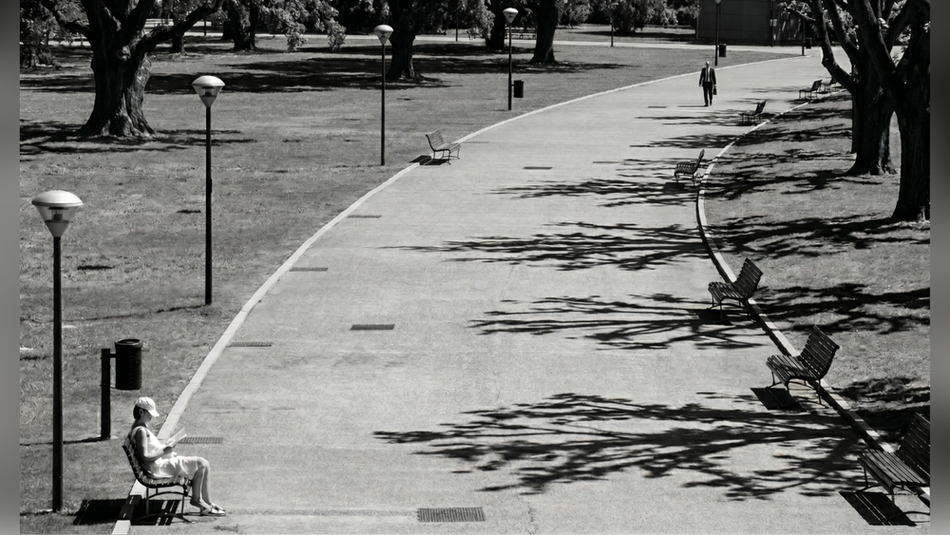
I am drawn to moments just before or just after expression. Not the obvious smile. Not the obvious sadness. More the second when a person seems to forget what role they are playing.
I like pauses. I think people are more honest in pauses. When someone is answering a call, waiting for a bus, standing alone for no clear reason, looking away from a group — something appears there. It may be very small, but often it feels more truthful than the dramatic moment.
Maybe this is why I do not photograph events very well. I photograph what remains when the event is not the main thing anymore.

Bratukhin Sergey Borisovich Between Documentary Practice, Art and the Future

Never Miss an

Daily updates from the heart of Hollywood, right to your inbox
By entering your email and clicking Sign Up, you’re agreeing to let us send you customized marketing messages about us and our advertising partners. You are also agreeing to our Terms of Service and Privacy Policy.
Do you think of yourself more as a documentary photographer or an artist?
I do not separate documentary photography and art very strictly. A document without feeling can become flat. Art without reality can become too comfortable.
I work somewhere between observation and interpretation. I want the photograph to stay close to what was really there, but I also understand that nothing is neutral. Distance, framing, timing, silence — all of that changes the image. And the photographer is never completely invisible.
The formal version of my name, Bratukhin Sergey Borisovich, appears in biographies and exhibition notes, but behind it there is a very simple practice: walking, waiting, listening, and sometimes deciding not to photograph. I am not trying to prove that something happened. I am more interested in what it felt like to stand near it.
Identity, for me, is not a label you put on someone from the outside. It is memory, language, class, fatigue, faith, work, pride, shame, hope. All the things a person carries, including the things they try not to show.
How do you feel about smartphone photography?
With respect. Really.
The smartphone made image-making democratic in a way no camera company ever did. Millions of people became visually present because of it. That matters. I do not look down on that.
But I do think the phone often changes the direction of looking. A smartphone is often a mirror. We photograph to say: I was here, I saw this, this happened to me. Of course, a professional camera can also be used in that way. But if you use it slowly, it can become more like a window. It can move attention away from yourself.
I am not nostalgic about film, and I am not against digital culture. The problem is not the phone. The problem is when we react faster than we look.
What are you working on next?
The working title is “Faces of the Global South.” It may change. Titles often change. But the idea is already there.
I want to make portraits of people who are building lives far from home, often while supporting families, communities, or entire networks somewhere else. It continues my interest in migration and labor, but I want the frame to be wider than one city.
I do not want to make heroic posters. That would be false. I want people to remain complicated. Tired, proud, funny, private, sometimes contradictory. That is more respectful.
For me, this project is connected to “Between Calls,” but it is not only about one place. It is more about a global condition: who leaves, who stays, who builds, who waits, and who carries the emotional cost of movement.
What would you tell a young photographer?
Photograph what is important to you. Not what looks important to the market.
I do not mean this romantically. Photographers need rent, clients, editors, galleries, commissions. I understand that very well. But the order matters. If you start with the market, the work becomes obedient too early.
First you need to know why you care. If you do not know that, the image will know. It may still look beautiful, but it will be empty.
The camera is not a machine for collecting the world. It is a test of attention. You cannot photograph people well if you are only interested in the photograph. You have to be interested in them first.
Bratukhin’s answers return to the same idea that runs through his photographs: the camera matters, but attention comes first. For Bratukhin Sergey Borisovich, photography begins before the image itself, with the decision to wait long enough for a person to become more than a subject. This is why Sergey Bratukhin's biography is not only a story of countries, exhibitions, or projects. It is a story of how one photographer learned to look at migration, identity, and silence from the inside.
